
Before you learn about Topic, make sure your phone is ready using our Valorant Mobile Compatibility Checker.
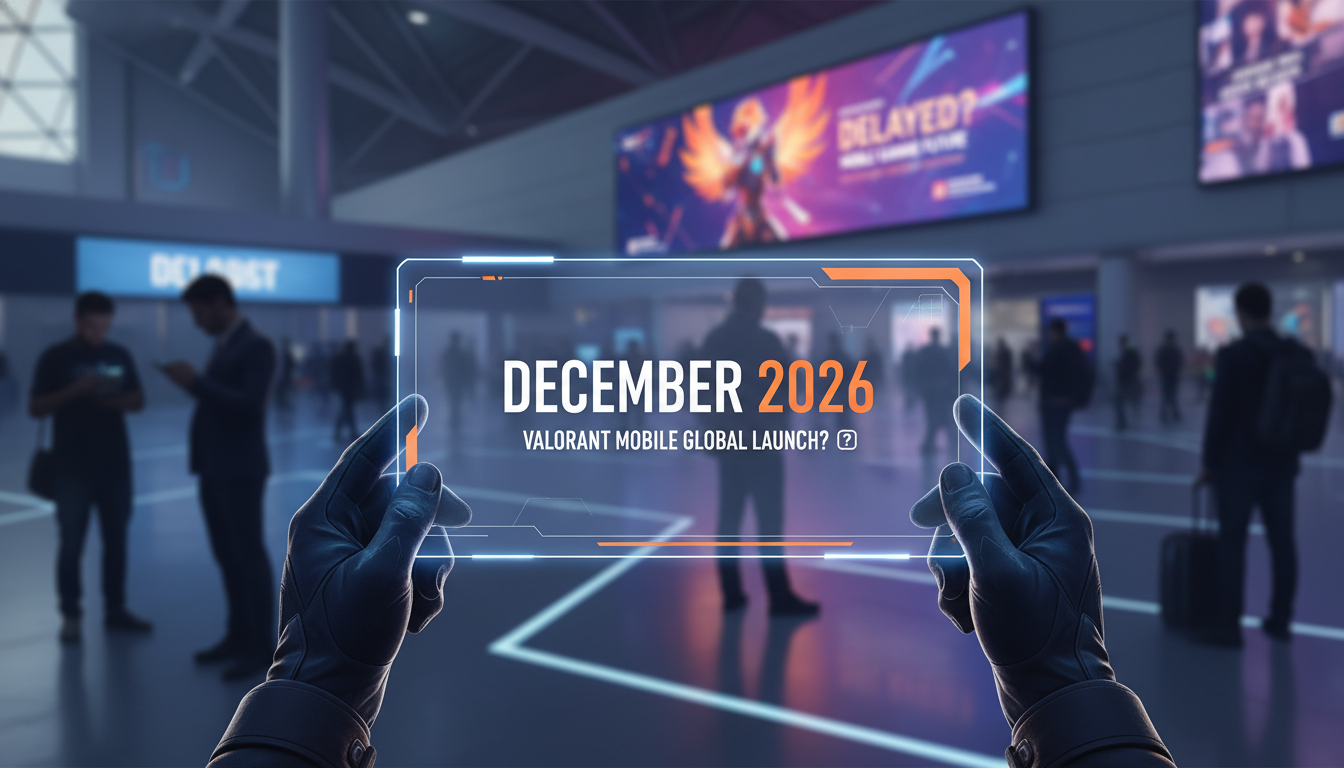
The projection for a Valorant Mobile global release date in late 2026 is driven by Riot Games’ strict adherence to “competitive integrity,” the distinct separation between the Chinese and Global development branches, and a phased rollout strategy designed to ensure server stability. While assets and gameplay footage from Chinese beta tests have surfaced, a realistic analysis of development milestones indicates that the global version requires a lengthy optimization period to replicate the precision of the PC experience on touchscreen devices. This likely pushes the full global launch to Q3 or Q4 of 2026.
Executive Summary: The Strategic Case for a Q3/Q4 2026 Release
Defining the Valorant Mobile global release date late 2026 projection
Based on current development cycles and regional beta patterns, Late 2026 represents the most viable window for a fully optimized global launch. This projection accounts for the 12-to-18-month gap typically seen between extensive regional soft launches (expected in 2025/early 2026) and a worldwide release. The timeline suggests that 2025 will be dominated by news regarding the Valorant Mobile China Launch Global Release 2025, while the global build undergoes rigorous stress testing.
Why Riot Games prioritizes ‘competitive integrity’ over a rushed launch
Riot Games has explicitly stated that they will not release Valorant Mobile until it meets their exacting standards for competitive play. Unlike casual mobile shooters, Valorant relies on precise gunplay and ability timing. Porting this to mobile requires solving distinct latency and control issues. Riot prioritizes the longevity of the game ecosystem over a quick cash grab, meaning they will delay the game until the “competitive integrity” matches the 128-tick feel of the PC version.
Contrasting optimistic Q1 predictions with realistic development milestones
Early predictions suggesting a global launch in Q1 2025 largely misunderstand the nature of current leaks. Most visible footage originates from the Chinese version, which operates under a separate license and development timeline. A global launch requires localized server infrastructure, anti-cheat calibration (Vanguard Mobile), and regulatory compliance across multiple regions—milestones that have not yet been publicly completed for the global market.
The ‘China-First’ Ecosystem and its Impact on Global Delays
Analyzing differences between China launch and global Valorant Mobile versions
The mobile gaming market in China is distinct, with Tencent leading development for the region. The differences between China launch and global Valorant Mobile versions are significant; the Chinese version often features different monetization models, social systems, and even slight gameplay tweaks tailored to local preferences. This version is currently further ahead in development, leading to confusion regarding the global status.
How the distinct development branch by Tencent in China affects the global codebase
While the core gameplay assets (maps, agents, skins) are shared, the backend infrastructure differs significantly. Tencent utilizes its own server architecture for the Chinese mainland, whereas Riot Games must adapt the global version to run on AWS or Riot Direct infrastructure to ensure low latency worldwide. This “forking” of development means the global team cannot simply “copy-paste” the Chinese launch code; they must rebuild the networking stack for a global environment. Read more about the expected Valorant Mobile China Launch India 2025 dynamics.
The necessity of a lengthy observation period following the Chinese release
Riot Games will likely use the Chinese launch as a massive data-gathering operation. By observing the meta, agent win rates, and bug reports from millions of Chinese players in 2025, Riot can refine the global build. This observation period introduces a natural delay, pushing the Valorant Mobile global release further into 2026 to ensure the West receives a balanced, polished product.
Technical Challenges Prolonging the Development Cycle
Major technical hurdles in Valorant Mobile global development regarding ‘Peeker’s Advantage’
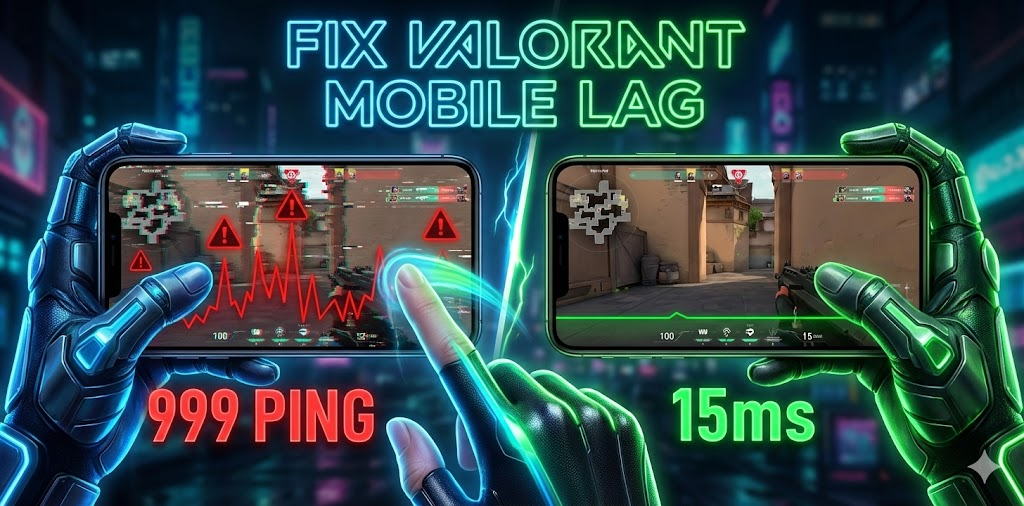
In tactical shooters, “Peeker’s Advantage” occurs when a moving player sees a stationary player before the server updates the stationary player’s client. This issue is exacerbated on mobile networks (4G/5G/WiFi) due to packet jitter. Mitigating this is the single biggest technical hurdle in Valorant Mobile global development. Riot cannot release the game until their netcode successfully minimizes this advantage, or the game will fail as a competitive title.
Optimizing Valorant Mobile server infrastructure and global scalability for high-tick rates
To replicate the crisp responsiveness of Valorant PC, the mobile version aims to simulate a high-tick-rate environment. Mobile CPUs are thermally constrained, and maintaining high server update rates without draining battery life or causing phones to overheat requires immense optimization. Building out Valorant Mobile server infrastructure and global scalability to handle millions of concurrent connections at these high-performance metrics takes years of engineering.
Ensuring cross-device fairness between low-end Androids and iPad Pros
A major challenge is ensuring a player on a budget Android device has a fair chance against a player on an M4 iPad Pro. Optimization for low-end devices without compromising the visual clarity required for a tactical shooter is a time-consuming process that often delays final release candidates.
The Phased Regional Rollout Strategy (2025-2026 Roadmap)
Why a phased regional rollout for Valorant Mobile global creates a natural delay
Mobile games of this scale rarely launch globally on day one. A phased regional rollout for Valorant Mobile global allows developers to scale servers gradually. This strategy is standard for massive multiplayer games to prevent server crashes and fix localized payment or connection issues before the main market launch.
The role of Valorant Mobile global beta testing and soft launch phases in SEA and LATAM
Southeast Asia (SEA) and Latin America (LATAM) are traditional regions for Valorant Mobile global beta testing and soft launch. These regions have high mobile engagement and provide excellent stress test data for Android optimization.
Timeline Breakdown (Projected)
| Phase | Timeframe | Activity |
|---|---|---|
| Internal Testing | Mid 2025 | “F&F” (Friends & Family) tests in Western regions. |
| Closed Alpha | Late 2025 | Restricted invite-only tests in select regions (SEA/Brazil). |
| Soft Launch | Early-Mid 2026 | Open Beta in specific countries to test monetization and servers. |
| Global Launch | Late 2026 | Full worldwide release (NA, EU, KR, JP, OCE). |
For insights on specific regional timelines, review the Valorant Mobile Release Date In India Expected.
Region-Specific Launch Estimates
Valorant Mobile release timeline for North America and Europe compared to Asia
The Valorant Mobile release timeline for North America and Europe generally lags behind Asia. Asia is a mobile-first market, making it the priority for early testing. Conversely, North America and Europe are PC-dominant markets with higher expectations for graphical fidelity and polish. Consequently, Riot will likely hold back the Western release until the application is flawless to avoid negative first impressions from a critical audience.
Why Western markets often receive the final ‘polished’ build last
Releasing a buggy game in the West can damage a franchise’s reputation significantly (e.g., via negative reviews on the App Store). Riot protects its brand equity by ensuring the NA/EU build is the “Version 1.0” product, incorporating all fixes learned during the Asian soft launches.
Riot Games’ Philosophy: Avoiding the ‘Apex Mobile’ Curse
Interpreting Riot Games development updates for Valorant Mobile 2026
Riot has observed the industry carefully. They witnessed Apex Legends Mobile launch successfully but shut down within a year due to content retention issues and quality control flaws. Interpreting Riot Games development updates for Valorant Mobile 2026, it is clear they are building a “forever game.” This requires a robust live-service content pipeline ready before launch, ensuring players have a roadmap of agents and maps for years, not just months.
Factors influencing Valorant Mobile global launch delay beyond code (Market Saturation)
- Factors influencing Valorant Mobile global launch delay also include market conditions. Riot may be waiting for a specific window where there is a lull in competitor releases (such as updates to Call of Duty: Warzone Mobile*) to maximize user acquisition.
Waiting for 120Hz screens to become standard in mid-range phones
By late 2026, 120Hz refresh rate screens will be standard even on budget-tier smartphones. Waiting until this hardware penetration increases ensures that a wider demographic can experience the game at the intended fluidity, which is crucial for a reaction-based shooter.
Addressing Community Speculation
Evaluating official leaks and rumors for Valorant Mobile global release
While leaks are rampant, it is vital to distinguish between assets and infrastructure. Evaluating official leaks and rumors for Valorant Mobile global release reveals that while the game looks visually complete in leaked videos, the backend matchmaking, social systems, and global server distribution are likely not.
Why data miners might see assets long before the server infrastructure is ready
Data miners often find skins or map files that are merely ported from the PC version. The existence of a “Reaver Vandal” skin in the mobile files does not indicate that the mobile server architecture is ready to handle millions of players. The visual layer is often finished years before the networking layer is perfected.
Conclusion: Why Late 2026 Ensures the Game’s Longevity
A Valorant Mobile Global Launch in Late 2026 is not a sign of trouble, but a sign of quality assurance. By prioritizing competitive integrity, learning from the distinct Chinese ecosystem, and adhering to a strict phased rollout, Riot Games is positioning Valorant Mobile to define the genre for the next decade rather than acting as a fleeting trend. The wait ensures that when the game finally arrives, it delivers the precise, tactical experience players expect.

1 thought on “Why Valorant Mobile Global Launch May Happen in Late 2026”