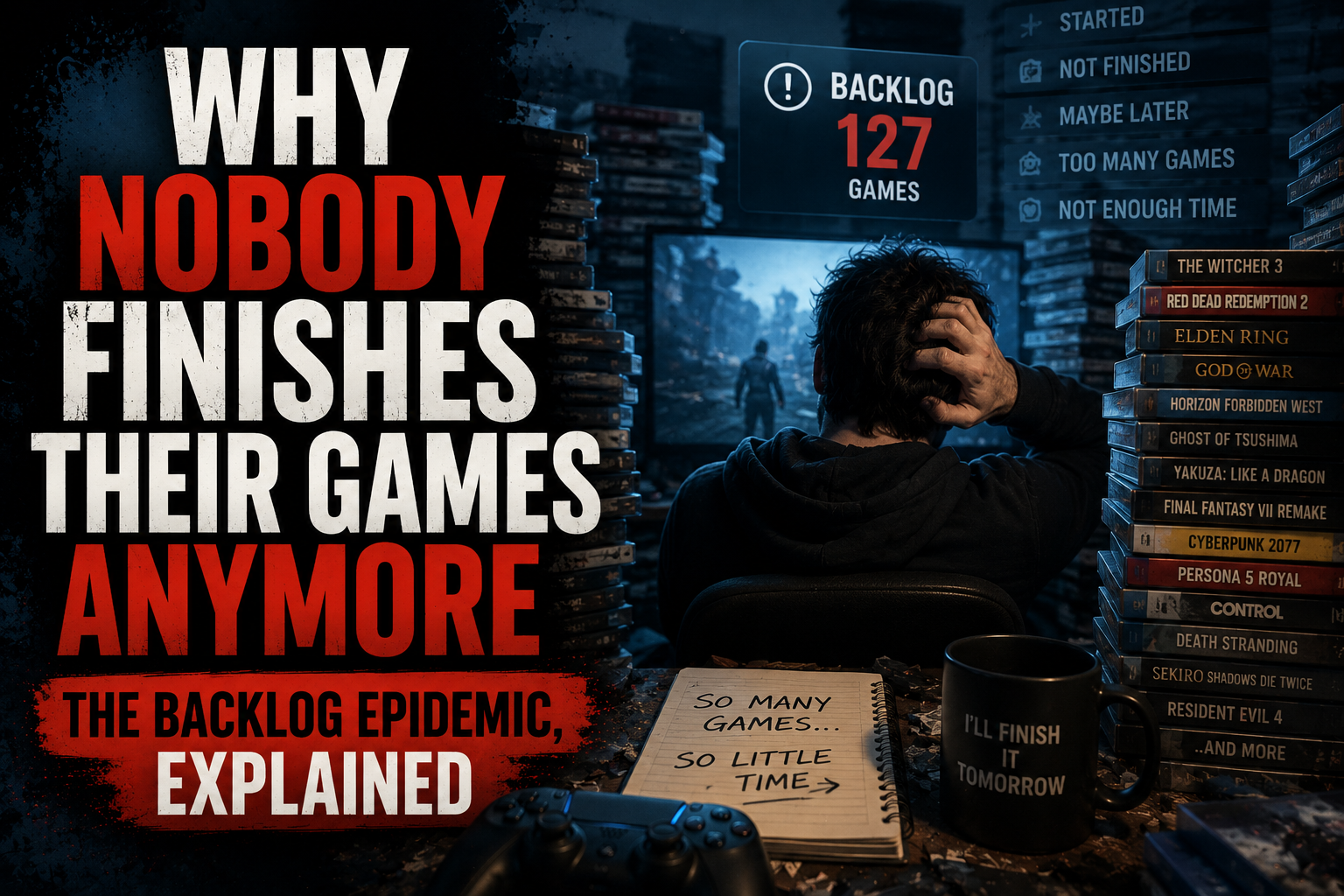

Open almost any Steam library older than a couple of years and you’ll find the same quiet graveyard: dozens, sometimes hundreds, of games sitting at zero hours played. Not abandoned mid-campaign — never even launched. A handful were bought in a moment of excitement during a big release week. Most were swept up in a sale, three-for-the-price-of-one, “I’ll get to it eventually.” Almost none of them ever get opened.
- The Trend, Briefly
- The Question Nobody’s Really Asking
- What Players Have Learned (Sometimes the Hard Way)
- The Economics Quietly Shaping the Trend
- A Wider Shift: Owning More, Committing to Less
- The Uncomfortable Part: Is the Backlog a Symptom?
- What This Trend Says About Us
- Conclusion: A Pile Worth Looking At Honestly
This isn’t a personal failing unique to disorganized players. It’s a structural feature of how games are sold, discovered, and consumed now, and it’s happening at a scale large enough to have a name: the backlog. Most coverage of this phenomenon treats it as a lighthearted meme — the “shelf of shame,” the joke screenshots of unplayed libraries. I want to look at it more seriously, because underneath the joke is a genuinely interesting story about how our relationship to games, ownership, and time has quietly changed.
The Trend, Briefly
The backlog isn’t a fringe experience. Data from GameDiscoverCo’s analysis of public Steam profiles found that, on average, 32.7% of the games in players’ Steam libraries are never played. The problem is even more pronounced than that average suggests: the median player has 51.5% of their Steam library unplayed, meaning that more than half of the games they own remain untouched. A separate 2026 synthesis of forum discussions across communities such as r/patientgamers and r/truegaming reached a similar conclusion, highlighting a persistent gap between the size of people’s game libraries and the smaller collection they genuinely consider part of their active gaming habits.
The supply side of the problem continues to accelerate. Steam has repeatedly broken its own concurrent-user records throughout 2026, reaching 42.3 million concurrent users during the Crimson Desert launch weekend. That milestone was fueled by the combination of a major seasonal sale and one of the year’s biggest releases arriving at the same time. Events like these encourage players to buy several new games at once—often before they’ve even started the games they purchased during the previous sale.
None of this points to laziness. Instead, it reflects a simple reality: digital game libraries are expanding far faster than the amount of free time people actually have to play them.
The Question Nobody’s Really Asking
Most backlog content stops at the joke: look how many unplayed games I have, haha, send help. That’s a fair reaction, but it dodges a more interesting question — why do so many players keep buying and collecting games they have no realistic plan to play? What is the purchase actually for, if not playing?
It’s Not (Just) About Having Too Many Games
The easy explanation is abundance: there are simply more good games than any one person has hours for, so of course things pile up. That’s true, but it doesn’t fully explain the behavior. Plenty of players keep adding to the pile during a sale even while staring directly at dozens of unplayed titles already sitting there. If abundance were the whole story, that behavior would be irrational. It only makes sense if the purchase itself — not the eventual playing of the game — is doing something for the player in the moment.
What the purchase seems to provide is a small hit of possibility: the sense of a future where you have time, energy, and curiosity to spare, and this particular world will be waiting for you when that future arrives. Buying the game is buying the idea of playing it. That idea is often satisfying enough on its own that the actual playing becomes optional.
The Streaming Precedent
This isn’t unique to games. As one industry analysis pointed out, the framing of “look how many unplayed games I own” would sound absurd applied to a streaming library — nobody frames their unwatched Netflix queue as a crisis requiring an intervention. Subscriptions and cheap digital ownership have quietly normalized a much larger gap between “things I have access to” and “things I actually consume,” across every kind of media, not just games.
Games just make the gap more visible, because a game library is a static, browsable list of individual purchases rather than a rotating catalog. You don’t feel guilty about the thousands of songs in a streaming catalog you’ll never hear. You do feel it when it’s forty individually-purchased games sitting in your own account, each one a small, itemized decision you made and then didn’t follow through on.
What Players Have Learned (Sometimes the Hard Way)
Not every attempt to “fix” the backlog works, and the failures are informative.
The “Completion Anxiety” Problem
A common instinct is to try to clear the backlog systematically — a strict rule to finish one game before starting another, a spreadsheet, a personal ranking system. This often backfires. Turning a leisure activity into a checklist tends to drain exactly the impulsive, low-stakes curiosity that made picking up a new game fun in the first place. Players who impose the strictest backlog discipline on themselves frequently report playing less overall, not more, because the hobby starts to feel like an obligation rather than a break from one.
This mirrors a familiar pattern outside gaming: turning rest or leisure into a project to be optimized tends to make it stop functioning as rest.
Ownership Without Commitment
The more durable adaptation players seem to land on isn’t clearing the backlog — it’s making peace with owning far more than they’ll ever finish, and treating the library less like a to-do list and more like a personal archive of possibility. In this framing, an unplayed game isn’t a failure sitting on a shelf; it’s closer to a book on a shelf you haven’t read yet but might, someday, want. The anxiety fades once the expectation changes from “I will finish everything I own” to “I own more options than I need, and that’s fine.”
The Economics Quietly Shaping the Trend
None of this is happening by accident. There’s a business logic underneath the backlog that explains why almost nothing in the industry is designed to discourage it.
Why Studios Profit From Games You Never Finish
A purchased-but-unplayed game is, from a revenue standpoint, identical to a purchased-and-completed one. The studio gets paid the moment you click buy, regardless of what happens afterward. There is essentially no commercial incentive built into the traditional sales model to help you actually play what you own — the incentive runs entirely the other direction, toward getting you to buy the next thing before you’ve finished the last one.
Subscription services complicate this slightly but don’t really change the underlying dynamic. Whether a platform is paid per-title or via a flat monthly fee, the thing being monetized is access and the feeling of having options, not necessarily engagement with any single game all the way through.
The Sale Machine That Never Stops
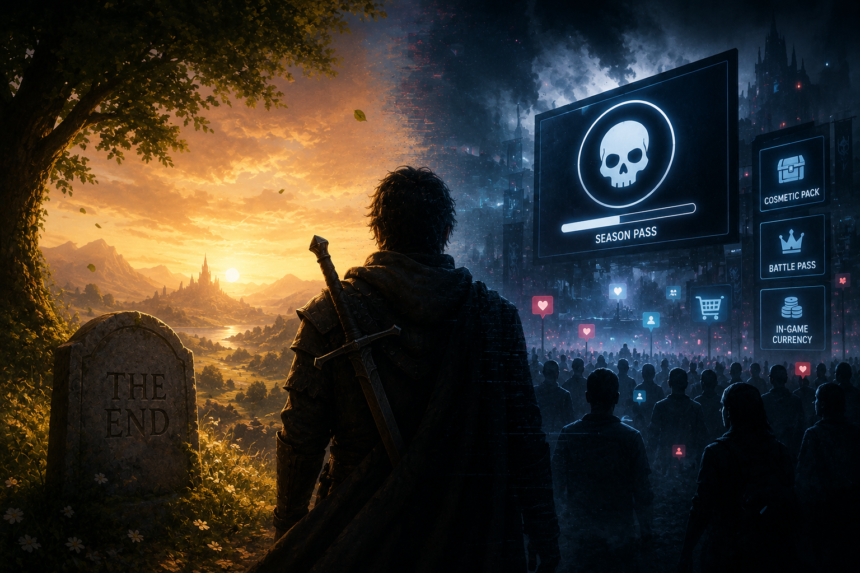
Recurring sales events are, structurally, backlog-generation machines. A deep discount lowers the bar for an impulse purchase far below the bar for an impulse play session, since buying costs a few dollars and a few seconds, while playing costs hours you may or may not actually have that week. The result is a purchase funnel that’s extremely good at converting curiosity into ownership, and comparatively indifferent to whether that ownership ever becomes an experience.
This is worth naming plainly: an industry built around frequent, steep discounts is, by its very design, also an industry built around accumulating backlogs. The two aren’t in tension. They’re the same mechanism, viewed from two different angles.
A Wider Shift: Owning More, Committing to Less
The backlog doesn’t exist in isolation. It’s one visible symptom of a broader shift in how people relate to media and possessions more generally.
From Scarcity to Overwhelming Choice
For most of gaming’s history, the constraint was money and shelf space — you owned relatively few games because each one was a real financial commitment, and you played most of what you bought simply because you didn’t have much else. Digital distribution and recurring sales inverted that constraint almost completely. Money is no longer the limiting factor for a huge share of players; time and attention are. But the industry’s core sales mechanics — discounts, bundles, storefront algorithms nudging you toward “just one more” — were built for a scarcity-era mindset, and haven’t really adapted to an abundance-era reality.
Shorter Sessions, Longer Shelves
At the same time, real life keeps compressing the time available for any single session — jobs, relationships, and general adult responsibilities leave less uninterrupted time for a fifty-hour campaign than it did a decade ago. Put those two forces together — libraries growing faster than ever, available play time shrinking or staying flat — and a backlog isn’t a personal failure of willpower. It’s closer to the predictable output of two curves moving in opposite directions.
The Uncomfortable Part: Is the Backlog a Symptom?
Here’s where the topic stops being simply a funny meme and becomes worth sitting with a little longer.
It’s tempting to treat the backlog as harmless — just a byproduct of liking games and liking sales. And there’s a real case for that. But it’s also fair to ask a slightly harder question: if a growing number of players are more comfortable buying the idea of an experience than actually having it, what does that reveal about how people are currently relating to their own leisure time?
The Case for Optimism
There’s a genuinely healthy version of this behavior. A large backlog can function as a kind of curated menu of future comfort — a guarantee that whatever mood you’re in next month, there’s already something on hand that fits it, without the friction of deciding what to buy in that moment. Seen this way, the backlog isn’t wasted money; it’s pre-paid flexibility, similar to keeping a well-stocked pantry even though you won’t cook every ingredient in it this week.
The Case for Caution
The less comfortable version is worth taking seriously too. If the purchase itself reliably delivers most of the emotional payoff — the anticipation, the sense of a better future self who has time for hobbies — then the actual playing becomes optional almost by design, and the pile keeps growing as a quiet, low-cost substitute for genuinely making time for things you claim to enjoy. That’s not a crisis, but it is a pattern worth noticing, especially if it’s showing up in other parts of life too: books bought and not read, subscriptions kept and not used, plans made and not kept. The backlog might be one of the more visible, itemized versions of a much more general habit of buying intention instead of following through on it.
What This Trend Says About Us
Every major shift in how games are sold has reshaped what players actually do with them. Physical media scarcity produced completionists who finished what little they had. Digital storefronts and endless sales produced collectors who own vastly more than they’ll ever finish. Subscription services are producing something closer to browsers — people who sample constantly and commit rarely.
None of these are worse players than the ones before them. They’re responding rationally to a completely different set of incentives than the ones that shaped earlier gaming generations. The backlog isn’t evidence that today’s players value games less. If anything, it’s evidence of how much value people place on the idea of having options — enough that they’ll pay for that feeling on its own, independent of whether they ever cash it in.
Conclusion: A Pile Worth Looking At Honestly
The backlog is easy to laugh at and easy to feel guilty about, and neither reaction gets at what’s actually interesting about it. It isn’t really a story about video games at all. It’s a small, well-documented case study in how people relate to choice, time, and the gap between who they are right now and who they imagine they’ll be once things calm down.
Whether a large backlog is a healthy safety net or a quiet form of avoidance probably isn’t something a Steam library can answer by itself — it depends on what’s happening in the rest of a person’s life, and whether the pile is a comfort or a stand-in for something else. Either way, it’s worth resisting the urge to either dismiss it as a joke or panic over it as a crisis. Few habits say quite this much about how people actually experience free time right now, once you stop counting the unplayed games and start asking why they’re there.
This article is part of an ongoing series looking at gaming industry trends through a reflective lens — not just what’s changing, but what those changes reveal about the people playing.