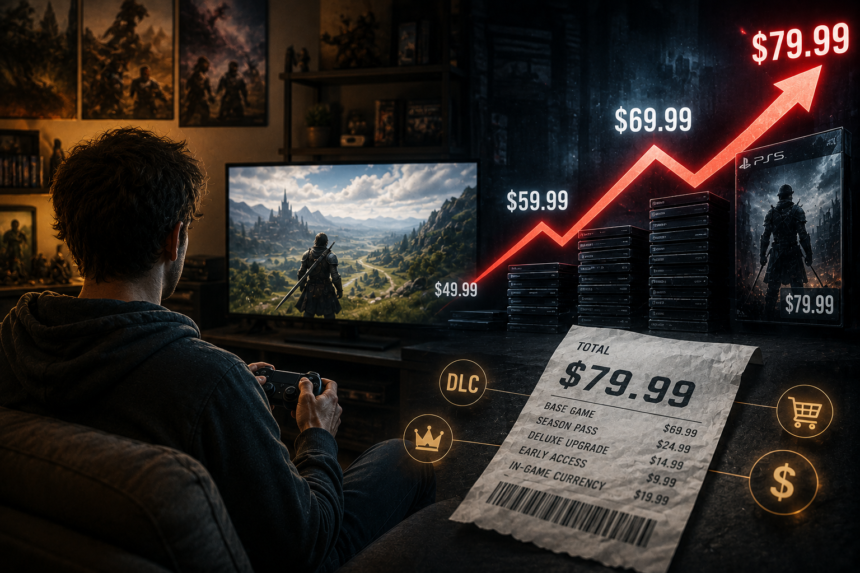
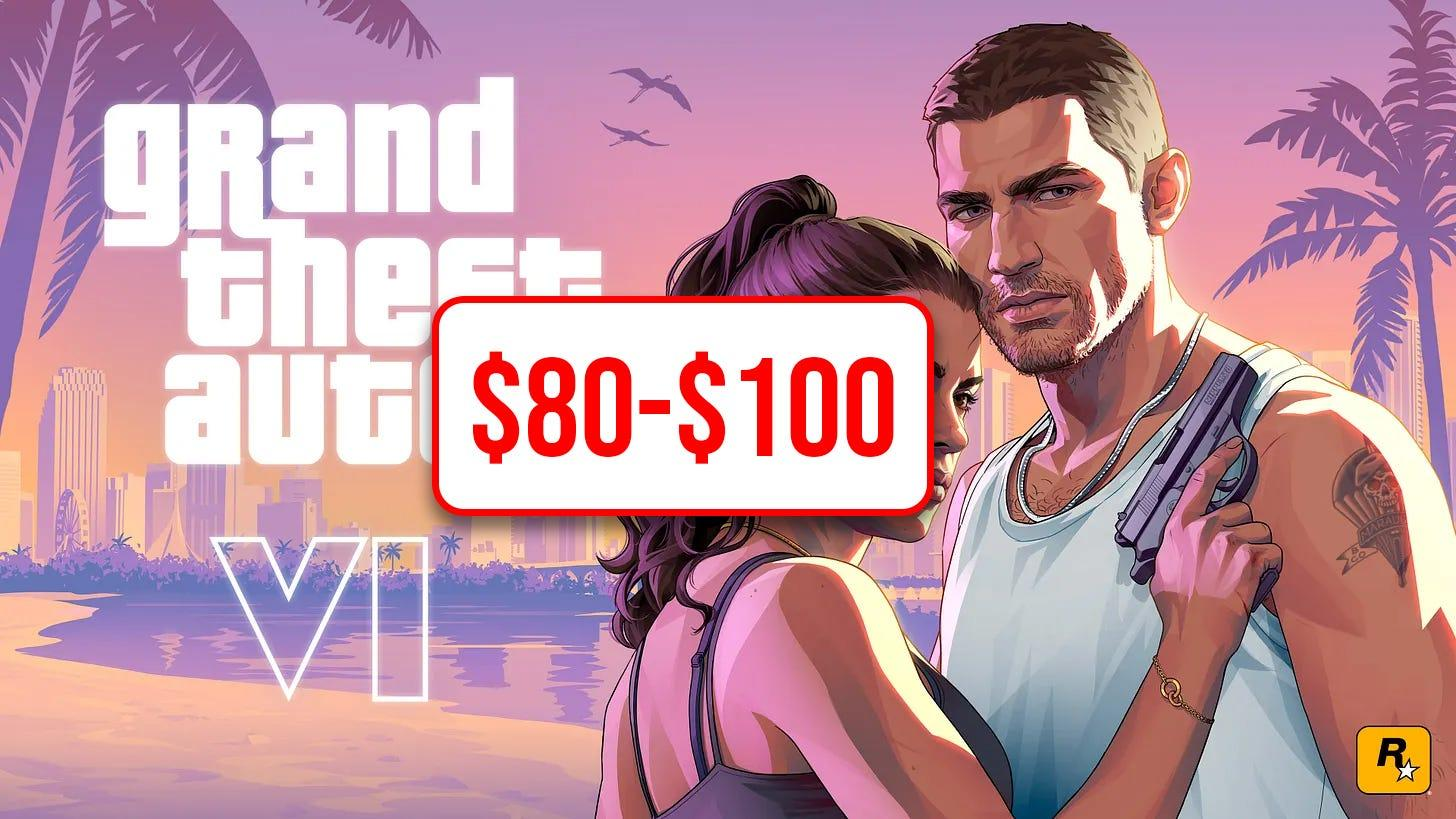

Rockstar didn’t quietly slip a new number onto a preorder page. It announced, in June, that Grand Theft Auto VI would launch at $80 for the standard edition and $100 for the Ultimate Edition — the most expensive mainstream console release in the medium’s history. Within hours, the discourse split cleanly in two: one half of the internet called it the moment AAA pricing finally broke, the other called it surprisingly restrained, because most analysts had spent the better part of a year braced for $100 across the board.
- The Trend, Briefly
- The Question Nobody’s Really Asking
- What Players Have Learned (Sometimes the Hard Way)
- The Economics Quietly Shaping the Trend
- A Wider Shift: Prestige Pricing Comes to Games
- The Uncomfortable Part: Is $80 a Ceiling or a Floor?
- What This Trend Says About Us
- Conclusion: A Number Worth Watching, Not Just Reacting To
Both reactions are correct, which is exactly what makes the number worth sitting with instead of just reacting to. $80 is simultaneously a record and an act of restraint, and the gap between those two readings says more about where the industry actually is than either headline does on its own.
The Trend, Briefly
GTA VI isn’t pricing in a vacuum. Nintendo priced Mario Kart World at $80 at Switch 2 launch and weathered a genuine wave of public frustration — and then sold nearly 10 million copies anyway. Microsoft tried the same move on The Outer Worlds 2, priced it at $80, watched the backlash land differently than it had for Nintendo, and quietly walked the price back down to $70 before launch. Industry analysts tracking the pattern, including Ampere Analysis’s Piers Harding-Rolls, describe $80 not as a new universal baseline but as a price tier reserved for a small number of releases positioned as genuine cultural events.
That’s the trend in one sentence: the $70 AAA price, itself controversial when it replaced $60 only a few years ago, has already stopped being the ceiling. It’s now the floor beneath a new premium tier that only a handful of franchises are trusted to occupy.
The Question Nobody’s Really Asking
Most coverage of the $80 price point stops at outrage or relief — is this fair, is this too much, will people still buy it. That’s a reasonable reaction, but it skips the more interesting question: why did $80 work for GTA VI and Mario Kart World, and fail for The Outer Worlds 2? The number was identical. The outcome wasn’t.
It’s Not (Just) About Greed
The easy explanation is that publishers are simply testing how much they can extract before players push back. There’s some truth to that — pricing power only exists because someone is willing to try it. But that framing doesn’t explain why the exact same price point produced a walk-back for one publisher and record preorders for another. If it were purely about tolerance for corporate greed, the backlash should have looked roughly the same in both cases.
What actually seems to separate the two isn’t the number, it’s the certainty behind it. Players weren’t being asked whether Grand Theft Auto was worth $80 in the abstract; they already knew, going in, exactly what they were paying for. A GTA release carries over a decade of built-in trust and, in this case, a genuinely record-setting development cycle behind it. The Outer Worlds 2 was asking for the same premium without the same certainty attached.
The Outer Worlds 2 Test Case
The Outer Worlds 2 is the more instructive story precisely because it failed. Microsoft attempted to normalize $80 pricing across a wider slice of its first-party lineup, not just its single biggest franchise, and the market corrected it almost immediately. The price dropped back to $70 before the game even launched. That’s not a sign the $80 experiment is over — it’s a sign the industry is still actively figuring out which titles have enough accumulated trust to charge it, and which don’t.
What Players Have Learned (Sometimes the Hard Way)
The public reaction to premium pricing has its own recognizable pattern by now, and it isn’t as simple as “players hate price increases.”
The Outrage-Then-Preorder Pattern
Mario Kart World is the clearest example: genuine, widely shared frustration at launch, followed by sales figures that suggest very little of that frustration translated into people actually walking away. This isn’t hypocrisy so much as a mismatch between how people talk about a price and how they behave in front of it. Complaining about a price publicly costs nothing. Skipping a game you were always going to buy costs something real. Those two behaviors don’t have to agree, and increasingly, they don’t.
Sticker Shock Without Sticker Consequences
One detail analysts keep returning to is that the loudest backlash tends to come from the most engaged part of the audience — the players buying dozens of games a year, who feel every price increase compounding across their whole hobby. The much larger, quieter audience that buys two or three games annually barely registers a $10 jump on a single purchase. That mismatch between who’s angriest online and who actually drives the bulk of revenue is part of why publishers can absorb the outrage cycle and still hit record sales in the same news cycle.
The Economics Quietly Shaping the Trend
None of this is happening because publishers suddenly decided to be bolder. There’s a specific financial pressure behind the number, and it’s less about the price of the box than about what’s inside the business.
Why the Sticker Price Was Never the Real Business
Development costs for the biggest games have exploded far faster than retail prices have. GTA VI reportedly represents one of the most expensive entertainment productions ever made, the product of a development cycle stretching back more than a decade, with budgets for top-tier releases now routinely running into the hundreds of millions. Against that backdrop, a price that moved from roughly $60 to $80 over the same stretch looks less like price gouging and more like a business trying to close a gap that was already enormous before the increase.
A Gap That Had to Be Closed Somewhere
That gap between exploding production costs and a comparatively flat retail price doesn’t just disappear — it gets absorbed somewhere in the business, and increasingly it’s absorbed by everything that happens after the sale, not the sale itself. The pattern set by Grand Theft Auto V is the template the rest of the industry has been building toward for over a decade: the initial purchase functions as the entry fee, while a persistent online mode and years of ongoing in-game spending do the actual work of turning a profit. Analysts tracking monetization across the industry now describe in-app purchases and live-service spending as the majority source of total market revenue, with the base game price acting almost as a loss leader for everything that follows.
A Wider Shift: Prestige Pricing Comes to Games
Step back from any single release, and the $80 tag looks less like an isolated pricing decision and more like games catching up to a pricing structure that’s already standard almost everywhere else in entertainment and consumer goods.
From One Price to a Tiered Market
For most of gaming history, AAA pricing was flat: a new console release cost roughly the same whether it came from the industry’s biggest franchise or its riskiest new IP. That flatness is breaking down. What’s emerging instead looks closer to how films, concerts, or streaming services price their content — a baseline tier for most releases, and a visibly higher “event” tier reserved for the handful of properties with enough built-in demand to justify it. $70 hasn’t gone away. It’s just stopped being the top of the market.
Who Actually Pays the New Price
The honest answer is: not everyone, and not evenly. Casual players who buy a couple of games a year are largely insulated from this shift, since they were never going to be price-sensitive about a once-a-year purchase either way. The players who feel the tiered pricing most are the ones in the middle — engaged enough to want the day-one premium releases, but not wealthy enough to treat an extra $10–$20 as background noise. That’s the audience the entire pricing conversation is actually happening around, even though it’s rarely framed that way.
The Uncomfortable Part: Is $80 a Ceiling or a Floor?
This is where the story stops being just about one price tag and becomes worth sitting with a little longer.
The Case for Restraint
There’s a real argument that $80 represents the industry showing more discipline than it’s given credit for. Rockstar, with arguably the most anticipated release in the medium’s history and a legitimate case for charging more, still stopped short of $100 for the standard edition. Several analysts who spent months predicting a triple-digit price point for GTA VI now describe $80 as evidence that publishers understand there’s a real ceiling to what even the most devoted audience will tolerate, and that ceiling held.
The Case for Concern
The less comfortable reading is that $80 was never really the ceiling — it was the test. Once a release with GTA VI’s cultural weight lands successfully at $80, that number becomes the new reference point every future “event” release gets measured against, the same way $70 became unremarkable within a couple of years of Nintendo and Sony first introducing it. And because so much of the industry’s actual revenue increasingly comes from what happens after the purchase rather than the purchase itself, there’s little structural reason to expect downward pressure on either number. A base price that quietly becomes an entry fee, sitting on top of a monetization layer that keeps expanding underneath it, is not a pattern that tends to reverse on its own.
What This Trend Says About Us
Every pricing shift in gaming’s history has reshaped what publishers assume players will accept without a fight. The jump from $60 to $70 felt significant in the moment and became invisible within a couple of release cycles. The current split between a $70 baseline and an $80–$100 event tier is following the same trajectory, just faster, because it’s happening inside an industry that already has years of practice normalizing exactly this kind of gradual repricing.
None of this makes players passive victims of the shift. The Outer Worlds 2 correction is proof that pushback still works when the premium price isn’t backed by enough trust to justify it. What the trend really shows is that trust, not tolerance for high prices in the abstract, is now the deciding factor in what a publisher can charge — and that the biggest franchises have built up enough of it to set the terms for everyone watching from below.
Conclusion: A Number Worth Watching, Not Just Reacting To
Eighty dollars is easy to treat as either a scandal or a non-event, and neither reaction captures what’s actually happening underneath it. It isn’t really a story about one number on one preorder page. It’s a live experiment in how much trust an industry has built up with its most devoted audience, and how far that trust can be converted into price before it snaps back — the way it did, almost instantly, when Microsoft tried to borrow Nintendo’s number without Nintendo’s decades of goodwill behind it.
Whether $80 stays a rare event-tier price or quietly becomes the new normal probably won’t be decided by outrage on release day. It’ll be decided by whether the next handful of games that try it have earned the trust GTA VI and Mario Kart World clearly had — and by what happens to the games that try it and don’t.
This article is part of an ongoing series looking at gaming industry trends through a reflective lens — not just what’s changing, but what those changes reveal about the people playing.