
When Death Stranding released in 2019, plenty of people did not know what to make of it. Here was a big-budget game from Hideo Kojima, one of the most famous designers alive, and its central activity was walking across empty landscapes carrying boxes. No sprawling battles, no power fantasy, just a lone courier named Sam trying to keep his footing while hauling cargo across a broken America. Some players bounced off it immediately. Others found, to their surprise, that it became a kind of meditation, a game about patience, effort, and the strange comfort of doing a difficult thing carefully. Both reactions are correct, and the gap between them is exactly what makes the game worth talking about.
This piece explores the Death Stranding meaning beneath its unusual premise: why Kojima built a whole game around walking and delivery, how its social system turns isolation into quiet togetherness, and what it is really saying about connection.
Key Takeaways
- Death Stranding makes traversal itself the gameplay, turning walking, balancing, and route-planning into the core challenge.
- Its central theme is connection, both literal, reconnecting a fractured nation, and emotional, rebuilding human bonds after catastrophe.
- The asynchronous online system lets players leave structures and signs that help strangers, embodying cooperation without direct contact.
- The slow, deliberate pace is intentional, asking players to find meaning in effort rather than spectacle.
- It is a divisive game precisely because it rejects instant gratification in favor of patience and reflection.
A Game About Walking, on Purpose
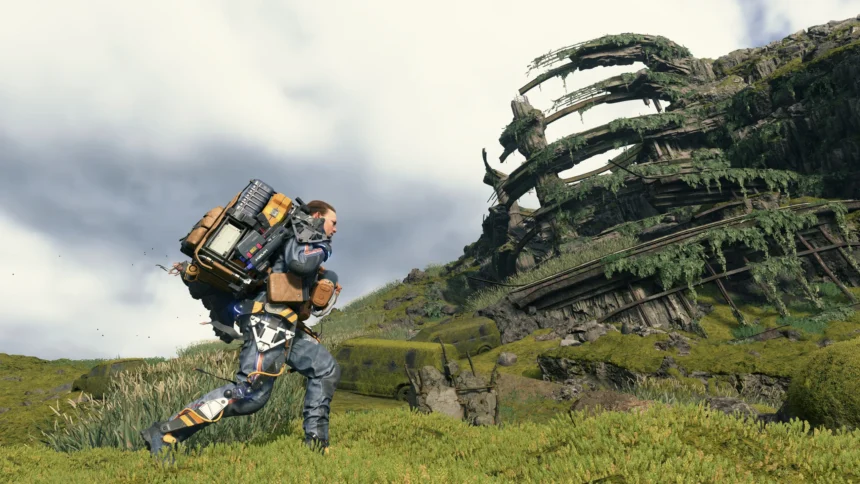
In most games, getting from one place to another is a formality solved by a sprint button or a fast-travel menu. Death Stranding makes traversal the entire point. Sam is a porter, and carrying cargo across rugged terrain is genuinely demanding. Load him too heavily and he becomes unstable. Cross a river too fast and the current sweeps him away. Descend a steep slope carelessly and he tumbles, scattering and damaging the packages people are depending on him to deliver.
So you learn to read the land. You plan routes around mountains, plant ladders across ravines, place anchors to rappel down cliffs, and constantly manage Sam’s balance with the controller. Walking becomes an activity that requires attention, and that attention is where the meditative quality comes from. The game slows you down until you start noticing things: the weather, the terrain, the rhythm of your own footsteps. It is the opposite of a power fantasy. It is a labor fantasy, and for many players that labor becomes strangely soothing.
The Theme Is Right There in the Title
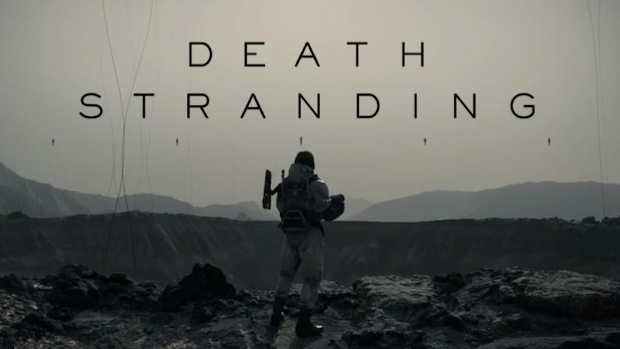
The world of Death Stranding has been shattered by a cataclysm that left survivors scattered in isolated bunkers, afraid to go outside because of invisible, deadly entities and a rain called Timefall that ages whatever it touches. Society has fragmented into disconnected pockets of frightened people. Sam’s mission is to travel across this ruined continent connecting these isolated communities to a communications network, quite literally reconnecting a broken country one delivery at a time.
The metaphor is not subtle, and Kojima does not intend it to be. The game was conceived and released in a period of intense political and social division, and its plea for connection over isolation is deliberate. But the theme runs deeper than politics. Sam himself suffers from a condition that makes him unable to bear being touched, and much of his arc is about a man who fears connection slowly learning to accept it. The game asks, over and over, what we owe one another and whether the effort of reaching across distance is worth it. Its answer is yes.
The Social System: Alone, Together
The most quietly beautiful thing about Death Stranding is its online design. You never see other players directly. But the structures you build, ladders, bridges, ropes, generators, roads, can appear in other players’ worlds, and theirs can appear in yours. You will be struggling up a treacherous mountain and suddenly find a ladder someone you will never meet placed exactly where you needed it.
The like system as pure gratitude
When another player’s structure helps you, you can give it a “like.” Likes have no competitive value. You cannot spend them, they do not make you stronger, and there is no leaderboard that meaningfully matters. They are pure, uncomplicated gratitude, a way of saying thank you to a stranger across the void. In a genre full of toxic competition, Death Stranding built a multiplayer system where the only thing you can do to another player is help them and thank them.
This mechanic is the theme made playable. The whole game argues that connection is worth the effort, and then it lets you feel that argument directly: a bridge you built to solve your own problem quietly becomes a gift to someone else facing the same river. Isolation and togetherness coexist. You are alone in your world, and yet never quite alone.
Why the Slow Pace Is the Message
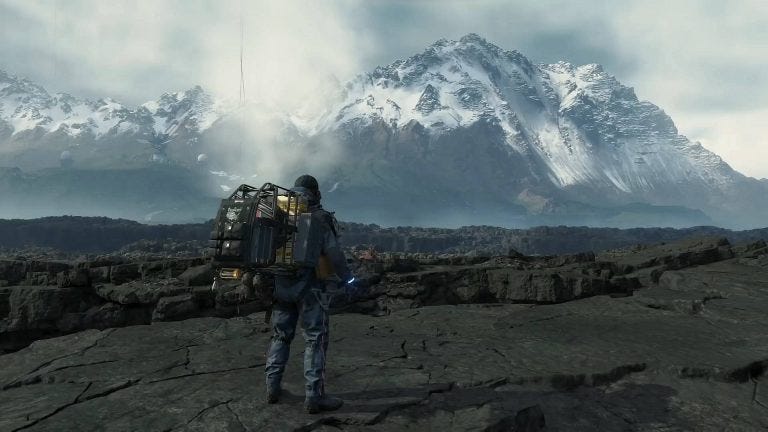
Critics of Death Stranding often point to its pacing, the long walks, the lengthy cutscenes, the deliberate refusal to hurry. But the pace is not a flaw to be endured; it is the argument. A faster game could not make you feel the weight of distance, the relief of finally cresting a hill, the satisfaction of a delivery completed intact. By making you invest real effort and real time, the game gives its small victories genuine emotional weight.
This is why the game divides players so sharply. If you come to it wanting constant stimulation, its patience feels like emptiness. If you meet it on its own terms, that same patience becomes a rare kind of focus, a game that lets your mind settle instead of hammering it with spectacle. Neither response is wrong. The game is simply asking for something most games do not: your patience, in exchange for meaning.
What It Leaves You With
Long after the strange, science-fiction plot fades, what stays is the feeling of the walk. The care you took with each step. The ladder a stranger left for you. The road that dozens of unseen players slowly built together, section by section, until a once-impassable region became a smooth highway of shared effort. Death Stranding turns the humble act of delivery into a story about why we bother to reach one another at all, and it convinces you, through hundreds of small kindnesses, that the reaching is worth it.
Conclusion
Death Stranding is a game that dares to be about effort, patience, and connection in a medium that usually prefers power and speed. By making walking meaningful, isolation literal, and cooperation anonymous and generous, it becomes something few games attempt: a meditation. It will not be for everyone, and it does not try to be. But for the players who slow down and meet it halfway, delivering a package across a broken world becomes one of the most quietly moving things games have to offer.
Frequently Asked Questions
What is the meaning of Death Stranding?
Death Stranding is about connection: literally reconnecting a fractured, isolated society, and emotionally rebuilding the human bonds that catastrophe and fear have broken. Through its courier protagonist Sam, it explores whether the effort of reaching across distance to help one another is worthwhile, and it consistently answers yes.
Why is Death Stranding just about walking and delivering packages?
The focus on walking and delivery is intentional. By making traversal genuinely challenging, requiring balance, route-planning, and care, the game turns effort itself into the core experience. This slow, deliberate design supports its themes of patience and connection and gives its small victories real emotional weight.
How does the online multiplayer in Death Stranding work?
Death Stranding uses an asynchronous social system. You never meet other players directly, but structures they build, such as ladders, bridges, and roads, can appear in your world and yours in theirs. You can give “likes” to helpful structures as pure gratitude, creating cooperation without any competition or direct contact.
Why is Death Stranding so divisive?
It divides players because it rejects the instant gratification most big games provide. Its slow pace, long walks, and lengthy cutscenes feel empty to some and meditative to others. The game deliberately asks for patience in exchange for meaning, so responses depend heavily on whether players meet it on its own terms.
Is Death Stranding a walking simulator?
It is often described that way, but it is more accurate to call it a traversal and delivery game. Walking is central, yet it involves deep systems of balance, cargo management, terrain reading, and construction, along with occasional combat and stealth. The label captures its pace but undersells its mechanical depth.
Do you need to play Death Stranding to understand the sequel?
Playing the original gives you the full emotional and thematic context, since its story of connection and its characters set up later events. While a sequel may recap key points, the first game’s themes of isolation, effort, and rebuilding bonds are best understood by experiencing its deliberate, meditative journey firsthand.