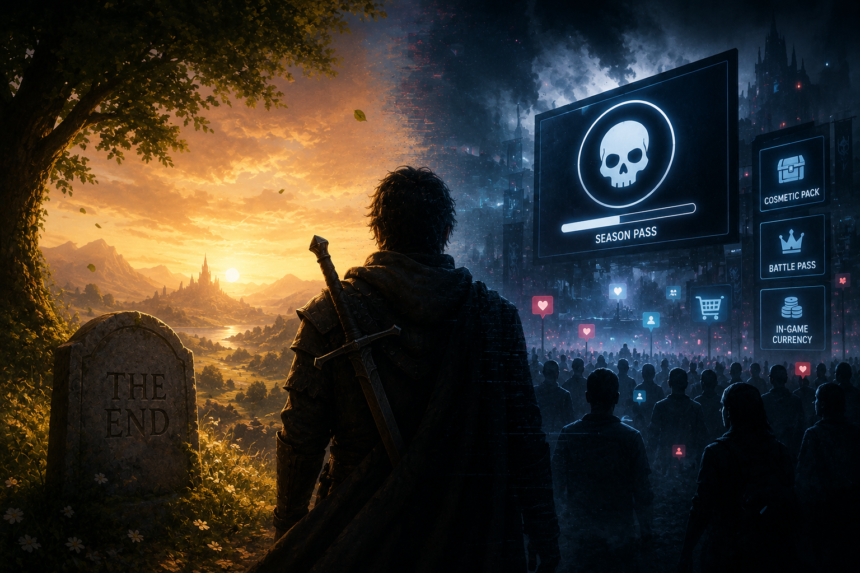
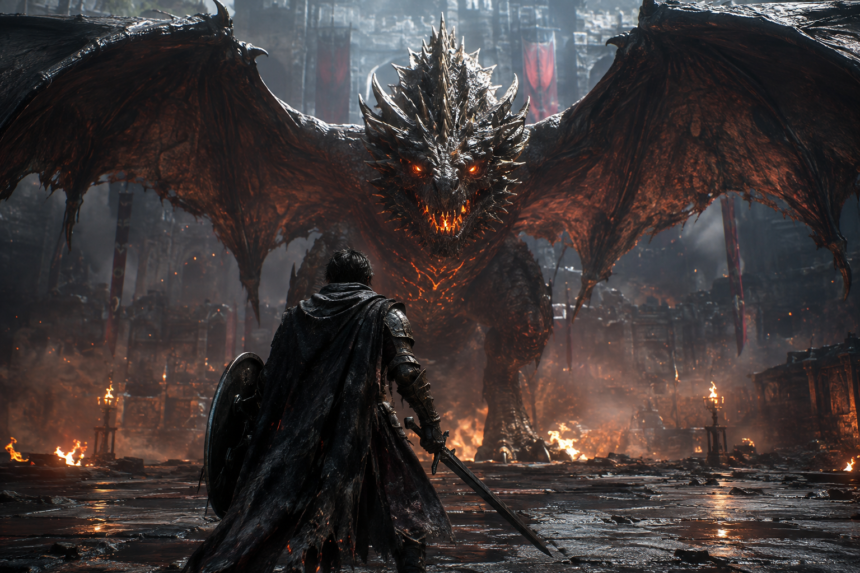

Open-world games keep getting bigger. Live-service titles keep adding more maps, more loot tiers, more daily quests. And yet the moment players still talk about years later is rarely the hundredth side mission — it’s the boss fight. The one that made them put the controller down and breathe. The one they looked up on a forum at 2 a.m. because they refused to lower the difficulty.
- The Contract Between Game and Player
- Three Kinds of Difficulty, and Only One That Lasts
- Why Escalation Matters More Than Raw Power
- The Role of Failure as Feedback
- What Modern Research Says About Difficulty and Engagement
- Why Bosses Resist the Content Treadmill
- The Risk of Treating Bosses as Spectacle Instead of Tests
- Case Studies: Three Approaches to the Same Problem
- Common Mistakes That Undermine a Boss Fight
- Frequently Asked Questions
- Conclusion
That staying power isn’t nostalgia. It’s design. Boss fights survive because they do something almost nothing else in a game can: they compress everything a player has learned into a single, undeniable test. This piece looks at why that format has outlasted decades of trends, what separates a boss fight players remember fondly from one they complain about in reviews, and why the format is uniquely resistant to the “more content, more hours” logic that drives so much of modern game design.
The Contract Between Game and Player
Every boss fight is built on an unspoken agreement. The game promises that if the player pays attention, the fight is fair — even when it doesn’t feel that way in the moment. The player promises to keep trying, on the assumption that failure is information, not punishment.
This is why boss deaths that feel “cheap” are remembered as bad design, while boss deaths that feel “earned” are remembered as some of gaming’s best moments. A cheap death breaks the contract: the game asked for effort and gave nothing back. An earned death honors it: the player walks away from a loss already knowing what they’ll do differently next attempt.
Dark Souls built an entire subgenre on this principle, but it didn’t invent it. Fighting game bosses from the arcade era ran on the same logic decades earlier — memorize the pattern, adjust, survive. What changed over time is how much information the game gives the player about why they died, and how much of that discovery is left for the player to work out alone.
Industry commentary on boss design keeps circling back to the same idea from different angles: a boss should be difficult, but the difficulty has to come with cues the player can actually read and react to, or the fight stops being a test and starts being a guessing game. Analysts writing about the format have repeatedly pointed out that attacks need to be telegraphed clearly enough to reward observation, even in fights designed to be genuinely tough.
Three Kinds of Difficulty, and Only One That Lasts
Not all hard fights create the same feeling, and lumping them together is where a lot of design conversations go wrong. It helps to separate them into three rough categories.
Mechanical difficulty asks for precise inputs, tight reaction windows, or resource management under pressure. This is the “your thumbs need to be good” category — dodge timing, combo execution, positioning under a strict clock.
Informational difficulty is different. The fight is beatable, but only once the player understands a pattern, a weakness, or a hidden rule the game hasn’t stated outright. This is puzzle-solving disguised as combat. The first attempt against a boss like this is rarely about skill; it’s about gathering data.
Attrition difficulty is the odd one out. The fight is a long war of numbers — bigger health bars, more adds, longer phases — with no new skill required, just more time and patience. This is the category most players describe when they call a boss “a damage sponge” rather than “hard.”
Mechanical and informational difficulty tend to produce the fights people remember fondly. Attrition difficulty tends to produce the fights people complain about in reviews. The reason is simple: attrition doesn’t teach anything. It just asks for more of what the player already knows how to do, which turns a boss fight into a chore with better music attached.
The best-remembered boss encounters usually blend the first two categories. They ask for real mechanical skill, but the skill only clicks once the player has decoded what the fight actually wants from them. Raid design in games like World of Warcraft is often cited as a case study here — encounters are built around a sequence of readable cues, a reaction window, and clear feedback, so that even a fight requiring dozens of attempts still feels like it’s teaching the group something new each time, rather than simply wearing them down.
Why Escalation Matters More Than Raw Power
A boss fight rarely announces its full arsenal in the opening seconds. Most well-designed encounters are structured in phases: an opening beat that reintroduces the core mechanics the player already knows, a middle section that adds one or two new complications, and a final stretch that combines everything the fight has taught so far into a harder, faster version of itself.
This structure exists for a reason beyond spectacle. It mirrors how people actually learn under pressure. Dumping every mechanic on the player in the first ten seconds produces panic, not engagement — there’s no room to build a mental model of what’s happening. Introducing complexity gradually, phase by phase, lets the player’s understanding of the fight grow at roughly the same rate as the fight’s demands. Design writing on this topic tends to frame it as a pacing problem as much as a difficulty problem: the anticipation building toward a boss across an entire level or dungeon is itself part of the experience, not just a preamble to the “real” fight.
This is also why so many iconic boss fights are remembered in terms of their phases rather than as a single continuous event. Players don’t usually describe a great boss as “hard.” They describe the specific moment the fight changed — the point where the arena collapsed, the second form appeared, or the music shifted key. That structural escalation is doing a lot of the emotional work that raw stat inflation never could.
The Role of Failure as Feedback
A well-built boss doesn’t just kill the player — it tells them something. A specific attack that keeps landing is the game pointing at a gap in the player’s positioning. A phase transition that wipes the party is the game saying “you weren’t ready for this yet, and here’s proof.”
This is why quick respawns next to the boss arena, rather than long walks back through cleared areas, tend to make hard fights feel more fair rather than less. The friction of failure should live in the fight itself, not in the administrative cost of trying again. When developers get this balance wrong — punishing routes back to the boss as harshly as the boss punishes mistakes — players stop treating death as feedback and start treating it as a tax.
There’s a behavioral angle to this as well. Writers who study game design through the lens of behavioral psychology have pointed out that a boss fight essentially functions as a compressed test of everything a player has built up to that point — every skill, every resource, every piece of muscle memory gets called on at once, in a single high-stakes moment. Regular enemies test slices of that skillset one at a time. A boss tests all of it simultaneously, which is part of why the format sticks in memory so much more strongly than the encounters surrounding it. The same commentary makes a useful distinction: a boss that takes three attempts to learn through telegraphed cues is memorable for the right reasons, while a boss that effectively requires an outside guide to beat is remembered as frustrating, not difficult.
What Modern Research Says About Difficulty and Engagement
This isn’t only a matter of opinion among critics and designers — it’s also an active area of academic research. Studies applying flow theory to games have translated the classic conditions for a state of flow — clear goals, direct feedback, and a challenge that matches the player’s skill level — into measurable design criteria that researchers use to evaluate whether a game (or a specific encounter) is likely to feel engaging rather than frustrating or boring. Separate survey-based research into player motivation has found that the level of challenge in a game is one of the strongest predictors of how long people keep playing, regardless of genre or the player’s demographic background.
More recent academic work has gone further, building systems that adjust boss difficulty dynamically in response to live player performance rather than relying on fixed, hand-tuned stats. One recent study modeling this kind of adaptive difficulty in a boss-battle context found that when the system produced clearly observable shifts in enemy behavior — rather than invisible, purely numerical scaling — participants reported both strong engagement and a high sense of fairness, even when the fights themselves were demanding. That distinction matters: player frustration tends to spike not when a game is difficult, but when players can’t tell whether the difficulty is responding to anything they’re doing.
Taken together, this research reinforces what critics have argued from a design and narrative angle for years: difficulty on its own isn’t the ingredient that makes a boss fight land. Legible difficulty — challenge paired with cues the player can read and adjust to — is what turns a hard fight into a memorable one.
Why Bosses Resist the Content Treadmill
Modern live-service design is optimized for retention: more things to do, more reasons to log back in tomorrow. Boss fights resist that logic. A great boss fight is a closed loop — the player either solves it or they don’t, and once they do, its job is finished. There’s no daily reset, no grind attached, no reason to repeat it beyond the pleasure of having beaten it once.
That’s precisely why boss fights cut through the noise of larger and larger games. In a landscape full of systems designed to keep players occupied indefinitely, a boss fight is one of the few remaining moments that asks for mastery instead of time. It has a beginning, an obstacle, and an ending the player actually earns rather than simply reaches by putting in enough hours.
This also explains why boss fights travel so well outside the games themselves. They’re the encounters people clip, share, and argue about online, precisely because they resolve. A hundred-hour open-world save file doesn’t compress into a shareable moment. A three-minute duel against a well-designed final boss does.
The Risk of Treating Bosses as Spectacle Instead of Tests
As budgets grow and open worlds sprawl, there’s a temptation to treat boss fights as set-piece spectacle rather than genuine tests — bigger health bars, bigger explosions, longer cutscenes stitched between phases. But scale isn’t what makes a boss memorable. Clarity is.
A fight where the player can point to the exact moment they understood the pattern, and the exact adjustment that got them through, will outlast a dozen fights that were simply larger. Some of gaming’s most frequently cited “worst boss fights” are the ones with the biggest production budgets — encounters where the camera, the music, and the visual effects are all doing their job, but the underlying mechanics are muddy, unreadable, or inconsistent between attempts. Spectacle without legibility produces frustration dressed up as ambition.
The inverse is also true. Some of the most replayed and discussed boss encounters in gaming history are mechanically simple by modern standards. What they share isn’t complexity; it’s consistency. The rules don’t change between attempt one and attempt fifty, which means every failure genuinely teaches the player something they can use on the next try.
Case Studies: Three Approaches to the Same Problem
It helps to look at how different franchises solve the same underlying design problem — how do you make a fight feel fair and hard at the same time — because the solutions vary more than players often notice.
The pattern-recognition approach. Souls-style bosses lean almost entirely on informational difficulty layered over mechanical execution. The first encounter with a new boss is deliberately unwinnable in a practical sense; it exists to show the player a moveset. Every subsequent attempt is really a negotiation between what the player remembers and what they can execute under pressure. The genre’s signature feeling of triumph comes specifically from the gap between “I understood what just happened” and “I can now do something about it.”
The escalating-arena approach. Character-action games and many JRPG final bosses favor multi-phase fights where the environment itself changes — the platform breaks apart, new hazards appear, the camera shifts to signal a new stage. This approach externalizes difficulty into the space around the player rather than only into the boss’s moveset, which is part of why these fights read as cinematic even when the underlying mechanical demands are relatively modest.
The systemic-encounter approach. Raid bosses in MMOs solve the problem differently again, by distributing the challenge across a group rather than an individual. No single player needs to track every mechanic; the fight is beatable because responsibilities are divided, and failure is diagnosed collectively after a wipe. This is why raid difficulty scales so differently from single-player boss difficulty — the “test” isn’t purely mechanical skill, it’s coordination and communication under a shared set of rules everyone has to internalize together.
None of these approaches is objectively superior. They’re solving for different experiences: individual mastery, cinematic tension, or group coordination. What they share is the underlying principle from earlier in this piece — legible difficulty, escalating in a way the player (or the group) can track and adapt to in real time.
Common Mistakes That Undermine a Boss Fight
A few recurring design mistakes come up again and again in post-mortems and player criticism, regardless of genre:
- Unclear hit boxes or attack ranges. If players can’t tell whether they were actually in range of an attack, every death feels arbitrary rather than earned, no matter how well the rest of the fight is built.
- Reused trash-mob patterns with a bigger health bar. Attrition difficulty dressed up as a boss fight is one of the fastest ways to make an encounter forgettable, because it doesn’t ask the player to do anything they haven’t already done for the previous hour.
- Punishing the walk back more than the fight itself. When reaching the boss again takes longer than the attempt itself, players start resenting the journey rather than engaging with the challenge.
- Withholding information the player has no way to infer. A one-shot mechanic with no visual or audio telegraph teaches nothing — it just resets progress with no attached lesson, which breaks the contract between game and player described earlier in this piece.
- Ending on the weakest phase. Some fights front-load their most interesting mechanic and end on a simpler damage race, which makes the climax feel like an anticlimax regardless of how strong the opening was.
Avoiding these pitfalls doesn’t require enormous budgets. Some of the most frequently praised boss fights in gaming history were built by small teams with limited resources — what they got right was communication between the fight and the player, not scale.
Frequently Asked Questions
Does a boss fight need to be difficult to be memorable?
Not necessarily. Difficulty is one tool among several. Some of gaming’s most memorable boss encounters are memorable for narrative weight, music, or a clever subversion of expectations rather than raw challenge. What tends to matter more than difficulty itself is whether the fight feels intentional — whether every element, hard or easy, seems designed rather than arbitrary.
Why do some players prefer harder boss fights even when it means more failure?
Research into flow and player motivation suggests that a challenge matched closely to a player’s current skill level produces more engagement than either an easy fight or an impossible one. For players operating at a high skill level, a fight that’s “too easy” can feel less rewarding than one that demands real effort, because the sense of accomplishment scales with the difficulty of the problem that was actually solved.
Is difficulty the same thing as fairness in boss design?
No, and conflating the two is one of the more common criticisms leveled at poorly received boss fights. A fight can be extremely difficult and still feel fair, if every failure teaches the player something usable. A fight can also be relatively easy and still feel unfair, if a single unavoidable mechanic occasionally kills the player regardless of skill.
Why do multiplayer raid bosses feel different from single-player boss fights?
Because the unit being tested changes. A single-player boss tests one person’s execution and understanding. A raid boss tests a group’s ability to divide responsibilities, communicate under pressure, and recover from individual mistakes without the whole encounter collapsing — which is a fundamentally different design problem, even when the underlying mechanics look similar on paper.
Conclusion
Boss fights endure not because they’re difficult for difficulty’s sake, but because they’re one of the few places left in modern game design where effort and outcome are still directly, honestly connected. That connection is rarer than it should be in an industry increasingly built around keeping players engaged indefinitely rather than testing them decisively. As games keep getting bigger, the boss fight remains one of the clearest reminders of what tight, legible design can still do that scale alone cannot.
Sources and further reading:
- Designing the Perfect Boss Battle: A Deep Dive into Crafting Memorable Moments — itch.io
- Boss Battle Design and Structure — Game Developer
- Make it Difficult, Not Punishing — GameDev.net
- Game Design Technique #14: Mastering the Boss Fight — Yu-kai Chou
- A Modular Framework for Dynamic Difficulty Adjustment in Boss Battles: A Case Study in The Elder Scrolls V: Skyrim — Applied Sciences (MDPI)
- Unveiling the Mystery: The Art and Science of Game Difficulty Design — GeniusCrate
Disclaimer: This article reflects the opinions and analysis of the author based on publicly available design writing and research. It is intended for informational and editorial purposes as part of The Ludic Mind’s ongoing coverage of game design and gaming culture, and does not represent the views of any game studio, publisher, or the individuals cited above. Game titles, characters, and franchises referenced are the property of their respective owners and are mentioned for commentary and analysis purposes only.