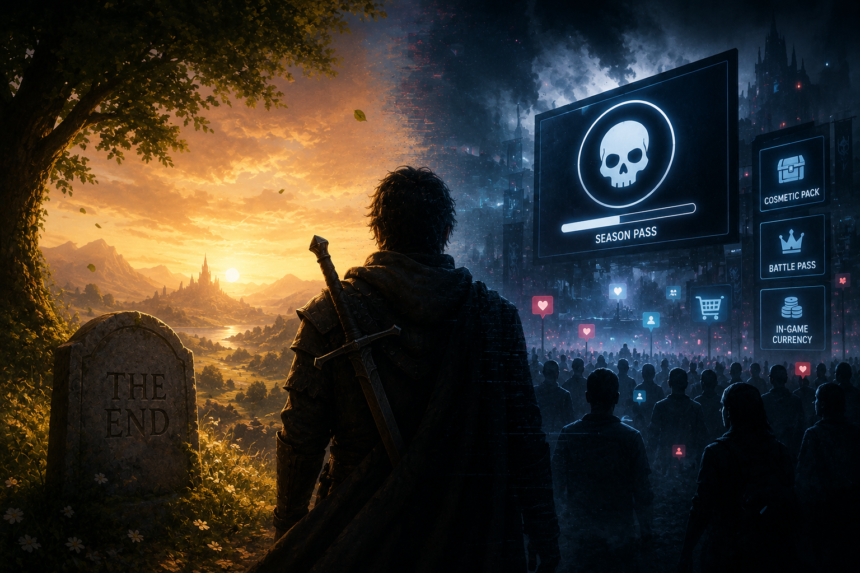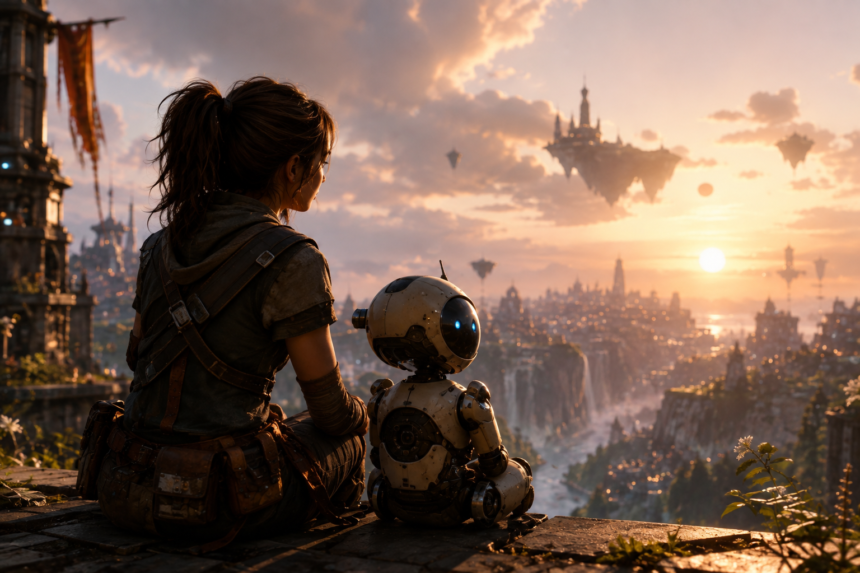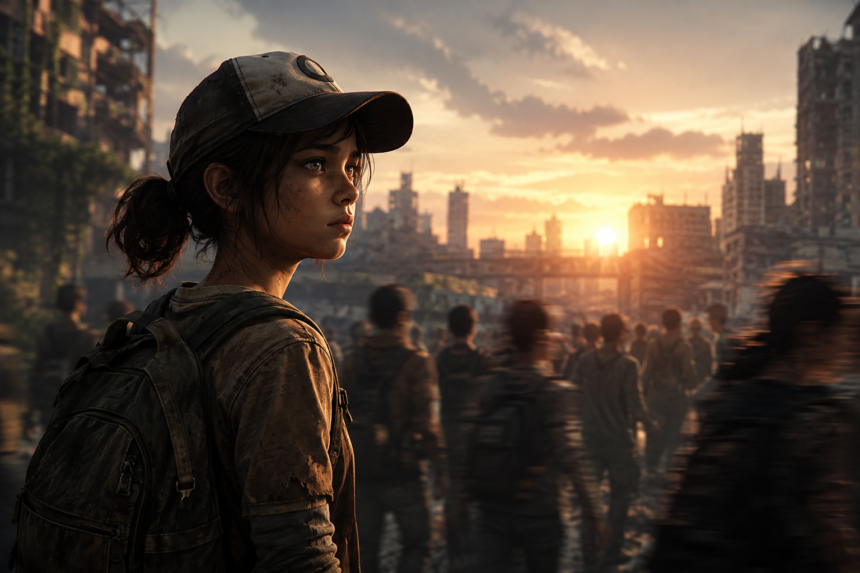
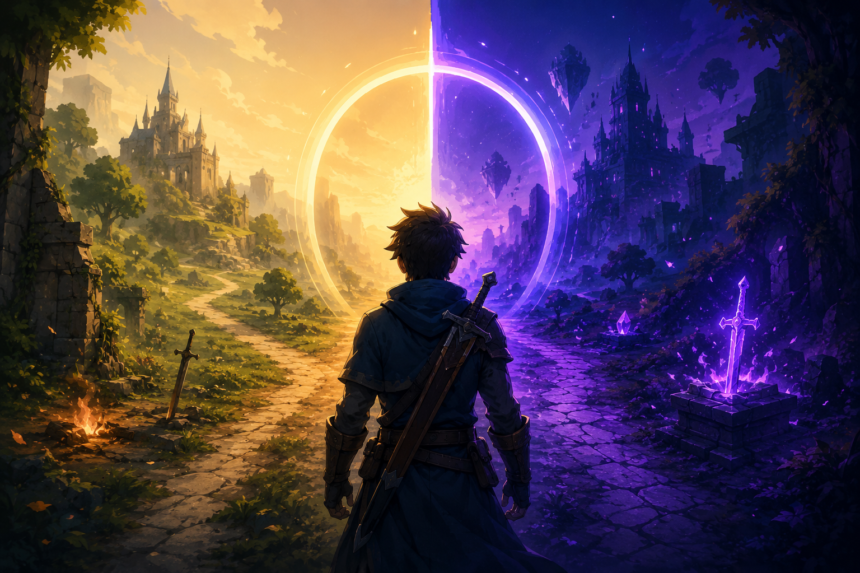

You already know how the story ends. You know which door hides an ambush and which chest is a trap. You could recite the boss’s second-phase attack pattern from memory. And yet the moment the credits roll, some players don’t close the game — they start it over, on purpose, carrying everything they earned into a fight they’ve already won once.
- What New Game Plus Actually Promises
- The Three Things Players Are Actually Buying
- Why This Maps So Cleanly Onto Self-Determination Theory
- The Design Problem Nobody Talks About: Depreciation
- When Replaying Becomes the Story Itself
- Common Mistakes That Undermine New Game Plus
- Frequently Asked Questions
- Conclusion
New Game Plus looks, on paper, like a strange thing to want. Most entertainment is built around not knowing what happens next. A movie loses something on a second viewing that a spoiler-free first watch has. A mystery novel can only be solved once. Games are one of the only mainstream media where finishing the story is sometimes just the unlock condition for the version players actually wanted to play. This essay looks at why that is — what New Game Plus is really offering players psychologically, why some implementations of it feel essential while others feel like padding, and what the format reveals about the difference between playing a game and mastering one.
What New Game Plus Actually Promises
At its simplest, New Game Plus lets a player restart a finished game while keeping some or all of what they earned — levels, gear, skills, sometimes even story knowledge the character shouldn’t logically have. That definition covers everything from a straightforward stat carry-over in an action RPG to something as structurally ambitious as NieR: Automata, where a second playthrough isn’t a bonus mode at all — it’s a different character’s perspective on events the player already lived through once, and skipping it means missing most of the actual story.
Those two examples point to two very different products being sold under the same label. One is a power fantasy extension: you finished the game, here’s a harder version where you get to feel unstoppable using the tools you spent thirty hours earning. The other is a narrative device: replaying isn’t optional padding, it’s how the story is actually structured, and the game withholds meaning specifically until the player has looped back through it. Both are called New Game Plus. Both satisfy completely different psychological needs.
The Three Things Players Are Actually Buying
It helps to break down what a player is really asking for when they choose to start over, because “replay value” as a marketing term flattens three distinct motivations into one word.
Mastery without stakes. The first playthrough of most games is spent learning systems while simultaneously being tested on them — you’re figuring out what a weapon does and trying not to die to the thing it’s supposed to kill. New Game Plus removes the learning curve and leaves only the performance. This is why so many players describe their second run as the one where the game “finally clicked” — not because anything changed, but because they were finally free to execute instead of improvise.
Efficiency as its own reward. A second run is almost always faster than the first, and for a specific kind of player, that compression is the entire appeal. Speedrunning culture and New Game Plus overlap heavily for this reason — both are built on the pleasure of doing something you already know how to do, better and faster than last time. This isn’t about the content anymore; it’s about the player’s own improvement being made visible.
Access to what the first run withheld. Some games structure their most interesting content — a hidden ending, a locked area, a character’s real motivation — behind the assumption that the player has already seen everything else. This is the category NieR: Automata belongs to, along with older examples like Chrono Trigger‘s New Game Plus endings or Nier (the original)’s multiple playthroughs. Here, replaying isn’t a reward for finishing; it’s a requirement for actually understanding what the game was doing the whole time.
Most well-regarded implementations of New Game Plus lean hard into one of these three and don’t pretend to be doing all of them at once. The ones players complain about tend to be the ones trying to be all three with none of the design work behind any of them.
Why This Maps So Cleanly Onto Self-Determination Theory
Game designers rarely need academic psychology to justify what already works, but in this case the research lines up unusually well with what New Game Plus is doing mechanically. Self-Determination Theory identifies three psychological needs that drive intrinsic motivation — the kind of motivation that doesn’t depend on external rewards to sustain itself: competence, autonomy, and relatedness. Games are one of the few everyday contexts capable of satisfying all three at once, repeatedly, on demand.
New Game Plus is arguably the purest expression of the competence need specifically. Research into repeat play behavior has found that players who return to finished games are typically mastery-oriented — they aren’t chasing novelty or a reward they missed, they’re deepening a skill, reducing completion time, or exploring a path they deliberately left alone the first time. That’s a meaningfully different behavior from, say, a live-service daily login streak, which is closer to habit formation through variable-reward reinforcement schedules than to anything resembling mastery.
This distinction matters because it explains a pattern critics have long noticed: players will happily replay a forty-hour single-player game from scratch, by choice, while resenting a five-minute daily chore in a different game. The forty-hour replay is autonomous and competence-driven. The daily chore is externally imposed and reward-driven. Both involve repetition. Only one of them feels like the player’s own decision.
The Design Problem Nobody Talks About: Depreciation
Here’s the part of New Game Plus that doesn’t make it into most marketing copy. The moment a player carries over their strongest gear and highest level into a new run, the game’s original difficulty curve is gone — permanently, for that save file. Every encounter that was tuned around a player with nothing has to be re-tuned around a player with everything, or it simply stops functioning as an obstacle.
Developers who have written about implementing New Game Plus describe this as one of the least glamorous and most labor-intensive parts of the feature. It isn’t a toggle. Enemy health, damage output, resource scarcity, encounter pacing, even scripted “you should be struggling right now” story beats — all of it has to be reconsidered for a player who is, by definition, no longer the player the first playthrough was designed for. Some studios solve this by scaling enemies upward to match the player. Others deliberately reduce what carries over, so the challenge curve survives even if the story doesn’t feel brand new. Neither solution is free, which is a large part of why New Game Plus is common in certain genres — action RPGs, character-action games, roguelike-adjacent titles — and comparatively rare in others where a fixed difficulty curve is load-bearing for the whole design.
This is also why New Game Plus modes built purely as a “harder version” so often feel worse than the original game rather than better. If the only lever pulled is bigger enemy numbers, the player experiences the exact same fight they already won, just slower, with more hit points standing between them and the outcome they already know is coming. That’s attrition dressed up as a bonus mode, and it produces the same fatigue attrition produces anywhere else in game design.
When Replaying Becomes the Story Itself
The more interesting version of New Game Plus abandons the “harder, same story” model entirely and treats the loop as a narrative tool. NieR: Automata is the reference point critics return to most often for this, and for good reason — its second playthrough isn’t the same events from the same angle filtered through bigger numbers, it’s a different character’s route through overlapping events, revealing context the first character never had access to. The player isn’t replaying to get stronger. They’re replaying because the story was never fully told the first time, on purpose.
This approach turns a structural quirk of games — that they can be started over at all — into something closer to an unreliable narrator technique in prose fiction, except the “unreliable” part isn’t a character lying to the reader, it’s the format itself withholding a full picture until the player has done the work of returning. Older examples like Chrono Trigger used a lighter version of the same idea: multiple possible endings gated behind a New Game Plus run, rewarding players who were curious enough to see what else the world had to offer rather than treating one ending as definitive.
What both approaches share is a refusal to treat the second playthrough as filler. The game has a reason for the player to be there beyond “you liked this the first time, so here it is again, but bigger.” That reason is what separates New Game Plus modes people actively seek out from the ones bundled in as a checkbox feature nobody asked for.
Common Mistakes That Undermine New Game Plus
A handful of recurring problems come up across post-mortems, patch notes, and player criticism, regardless of genre:
- Treating it as a stat multiplier with nothing else attached. If the only change is bigger numbers on both sides of every fight, the mode reads as busywork rather than a genuine second experience, no matter how much the marketing calls it “the ultimate challenge.”
- Breaking the story’s internal logic. Carrying knowledge, gear, or relationships the character shouldn’t have yet into an early story beat can undercut tension the writers worked hard to build the first time around — a problem several smaller studios have flagged specifically as a reason to limit what actually carries over.
- Under-scoping the feature relative to its cost. Developers who have documented building New Game Plus modes consistently note that the interactions between systems — wave timings, hit counts, heal rates, scripted triggers — multiply in complexity fast, and a mode built as an afterthought tends to show it in exactly those seams.
- Offering no reason to finish the loop. If there’s no new content, no alternate ending, no fresh context, and no meaningfully different challenge, the mode is asking players to spend hours re-executing something they’ve already proven they can do, for no payoff beyond a badge on a menu screen.
- Gating essential story content behind a mode players might not discover. When a game’s real ending — the one that actually explains the plot — is locked behind a New Game Plus run with no in-game signal that it exists, a meaningful share of players finish the game believing they’ve seen the whole thing when they haven’t.
None of these mistakes require a small budget to avoid. They require a clear answer, decided early, to the question “what is this second playthrough actually for” — and then building every system around that answer rather than bolting one on after the fact.
Frequently Asked Questions
Is New Game Plus the same thing as a difficulty setting?
No, though they’re often confused. A difficulty setting changes how hard the same playthrough is before you’ve started it. New Game Plus specifically requires having already finished the game once, and it usually changes what the player brings into the new run — carried-over gear, stats, or knowledge — rather than just adjusting enemy stats in isolation.
Why do some games lock their real ending behind New Game Plus?
Usually because the developers want the player’s understanding of the story to deepen across multiple viewings, the way a novel or film rewards a second read differently than a first. NieR: Automata is the clearest modern example — its structure assumes the player will see the same events at least twice, from different vantage points, before the full picture is available.
Does New Game Plus make a game too easy to be fun?
It can, if the only thing carried over is raw power with no corresponding change to the challenge. The strongest implementations either scale enemies to match the player’s new strength or shift what “difficulty” even means in the replay — testing efficiency, resource management under new constraints, or narrative comprehension instead of raw survival.
Why do players replay games they’ve already finished instead of moving on to something new?
Research into repeat-play behavior suggests it’s largely mastery-driven rather than novelty-driven: players aren’t looking for something they haven’t seen, they’re deepening a skill, reducing their completion time, or exploring choices they deliberately avoided the first time. That’s a form of intrinsic motivation built on competence, distinct from being pulled back in by external rewards like daily login bonuses.
Conclusion
New Game Plus survives as a design feature because it answers a question most entertainment never has to: what happens after the ending, for the people who genuinely don’t want to leave? Movies and books mostly assume the answer is nothing — you finish, you move on, maybe you return years later for nostalgia. Games, uniquely, can offer somewhere to go that isn’t backward and isn’t quite forward either. It’s a third direction: deeper into the same world, carrying what you learned, sometimes discovering the game was never fully finished telling you what it meant. That’s a strange thing to want from a story you already know the ending to. It’s also, for a certain kind of player, the entire point of finishing it in the first place.
Sources and further reading:
- In Praise of Games That Get New Game Plus Right — PC Gamer
- What Is New Game Plus in Gaming? Meaning, Example, and How It Works — G2A News
- Simple Article: Designing New Game Plus — Red Hare Studios
- The Psychology of Repeat Play: Why We Keep Playing — Guul Games
- New Game Plus — Ultimate Pop Culture Wiki
Disclaimer: This article reflects the opinions and analysis of the author based on publicly available design writing and research. It is intended for informational and editorial purposes as part of The Ludic Mind’s ongoing coverage of game design and gaming culture, and does not represent the views of any game studio, publisher, or the individuals cited above. Game titles, characters, and franchises referenced are the property of their respective owners and are mentioned for commentary and analysis purposes only.