
What does it mean to lead an organization when the thing keeping you sane is a presence living inside your skull that you never actually agreed to let in?
- A Director Who Was Never Fully Alone in There
- Polaris as a Voice That Helped and a Voice That Cost Her
- The Bureau as a Family That Never Apologizes
- A Brother Lost to the Thing She’s Now In Charge Of
- Authority Without Ever Feeling Like Consent
- Becoming the Director Without Becoming the Voice
- Final Thoughts: What Jesse’s Story Actually Argues
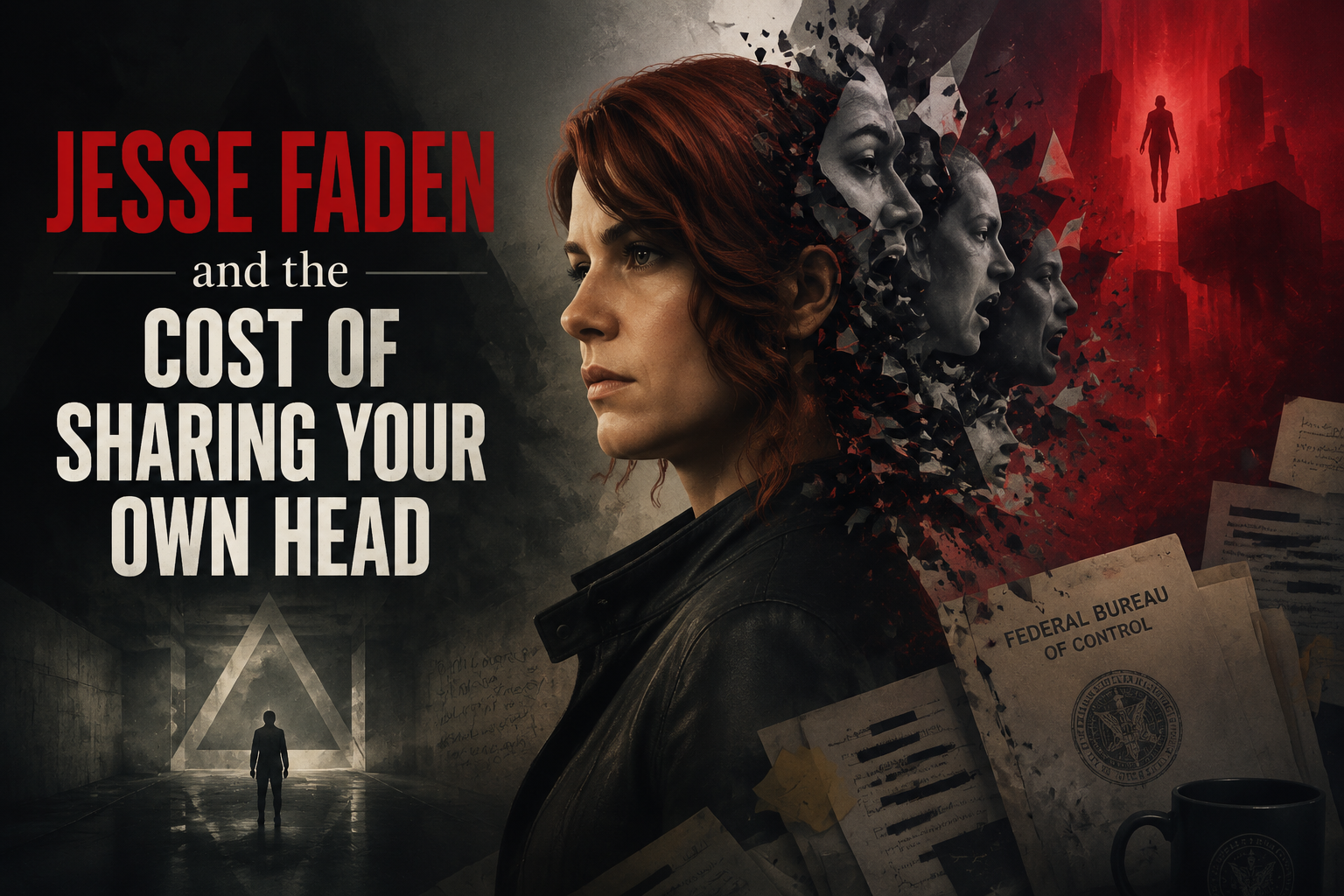
That’s the uneasy premise sitting at the center of Control, a game that hands its protagonist immense institutional power — Director of the Federal Bureau of Control, able to reshape a shifting building with her mind — while quietly making sure the player never forgets how little of that power Jesse Faden actually chose for herself. She didn’t apply for the job. She inherited it the moment she picked up a gun that decided, on its own terms, that she was worthy of wielding it. Everything that follows is Jesse learning to run an agency that was never designed to be run by someone who arrived through the front door as an accident.
Most games about newly acquired power let the protagonist enjoy it, at least for a while, before the cost catches up. Control is unusual because the cost is baked into the premise from the opening minutes: Jesse’s authority comes bundled with a voice in her head she cannot fully trust, a bureaucracy built on secrecy she cannot fully audit, and a brother she lost decades earlier to the very phenomenon she is now, apparently, in charge of containing. The game never lets “Director” feel like a title she’s earned. It always feels, instead, like a role she’s occupying provisionally, one crisis away from losing her grip on it entirely.
This article continues an ongoing series exploring what game characters reveal about identity, power, and the values that shape the choices we make under pressure. Jesse belongs in it because Control does something rare: it makes institutional power itself the horror, rather than the reward, and asks what it costs to hold authority you can’t be sure is really yours.
A Director Who Was Never Fully Alone in There
From the moment she arrives at the Oldest House, Jesse is never simply herself. A presence she calls Polaris has been with her since childhood, a voice offering guidance framed as light rather than command, steering her away from danger and toward decisions she’s told, repeatedly, are hers to make. The game is careful never to let the player forget this arrangement is strange. Jesse isn’t hearing intrusive thoughts in the way horror fiction usually stages possession. She’s sharing decision-making space with something she didn’t invite and can’t fully separate herself from — and has learned, out of necessity, to call that arrangement help rather than intrusion.
That framing matters, because it sets up the game’s central discomfort early: Jesse’s entire journey through the Bureau is presented as her exercising authority and choice, while a second presence sits quietly behind nearly every decision she makes. The game doesn’t resolve whether Polaris’s guidance has ever actually been neutral. It simply keeps handing Jesse more power, more responsibility, and more reason to keep trusting a voice she has no real way of auditing.
Why This Matters for How the Game Frames Control Itself
This is a clever structural choice for a game literally named Control. Nearly everything Jesse does mechanically — reshaping the environment, commanding objects, exerting will over hostile forces — is framed as an act of personal control. And nearly everything narratively is undercutting that framing, one revelation at a time, by reminding the player that Jesse’s control was never fully hers to begin with. The dissonance between what the mechanics let you feel and what the story keeps insisting is true isn’t a flaw in the design. It’s the entire argument, delivered through gameplay instead of dialogue.
Polaris as a Voice That Helped and a Voice That Cost Her
Polaris isn’t written as a malevolent force, which is precisely what makes it unsettling. It has, by every visible measure, kept Jesse alive, guided her toward the Bureau, and helped her survive encounters that would have destroyed someone navigating the Oldest House without any guidance at all. The game never gives the player a clean reason to distrust it. That absence of a clean reason is the point: Jesse has built an entire adult life around trusting something she has no independent way of verifying, because the alternative — facing the Oldest House and her own history completely alone — is worse.
Practical Example: The Board’s Language and the Price of Being Understood
The clearest illustration of this trade-off comes through the Board, the reality-bending entities Jesse must communicate with to secure her position as Director. Their speech is deliberately alien, layered, resistant to plain interpretation — and Polaris is frequently the thing that helps Jesse parse what they actually mean, translating incomprehensible authority into something she can act on. Every time this happens, the game quietly reinforces the same trade Jesse made years earlier: comprehension and survival, purchased at the cost of full independence. She understands the Board because Polaris helps her understand it. She survives the Bureau because she’s never fully navigating it by herself. The game never asks the player to condemn this arrangement. It only asks you to notice, again and again, how much of Jesse’s competence is actually a partnership she didn’t get to negotiate the terms of.
The Bureau as a Family That Never Apologizes
The Federal Bureau of Control functions, throughout the game, less like a workplace and more like an institution demanding the kind of unconditional loyalty usually reserved for family — full of secrets kept from its own employees, decisions made without explanation, and a working assumption that anyone inside deserves to be there simply by virtue of having survived long enough to stay. Jesse steps into leadership of this institution without ever being shown its full history, its true costs, or the actual scope of what previous Directors sacrificed to hold the position she now occupies.
That’s a deliberate choice on the game’s part. The Bureau never apologizes for its opacity, and neither does the narrative fully condemn it. Instead, Control lets Jesse’s relationship with the institution mirror a familiar, uncomfortable dynamic: loving and needing something that will never fully explain itself to you, because leaving isn’t really a viable option and staying at least comes with purpose.
Real-Life Parallel: Institutions That Ask You to Trust Them Without Earning It
This dynamic will feel recognizable to anyone who has worked inside an organization — a job, a bureaucracy, even a family system — that demands trust as a precondition for belonging rather than something earned through transparency. Jesse’s arc as Director isn’t really about mastering the Bureau’s secrets. It’s about learning to function competently inside an institution that will never fully earn the trust it requires from her, and deciding, deliberately, what she’s willing to give it anyway and what she isn’t. That’s a more honest arc than most workplace narratives allow themselves — one where competence and unresolved distrust are allowed to coexist for the entire length of the story.
A Brother Lost to the Thing She’s Now In Charge Of
Threaded through Jesse’s present-tense crisis is an old one: her brother Dylan, taken by the Bureau during the same childhood incident that first brought Polaris into her life, now imprisoned within the very institution she’s come to lead. Jesse’s search for him isn’t framed as a side quest bolted onto the main plot. It’s the emotional foundation the entire game is built on top of — the reason she came to the Oldest House in the first place, long before “Director” was ever a title on the table.
Finding Dylan doesn’t resolve into the reunion the setup seems to promise. He’s alive, but altered by decades of exposure to the same phenomena Jesse now oversees, no longer entirely the brother she remembers, no longer fully separable from the forces that took him. The game refuses Jesse — and the player — the clean rescue narrative that the opening hours seem to be building toward.
Why This Matters for the Philosophy of Games as a Genre
This refusal is where Control distinguishes itself from a more conventional power fantasy. A lesser script would let Jesse’s rise to Director double as a rescue mission completed on schedule, brother restored, family reunited, power justified retroactively as the means to a happy ending. Instead, the game insists that authority and reunion aren’t guaranteed to arrive together, and that gaining institutional power doesn’t automatically undo the damage the institution already did before you arrived. Jesse becomes Director and still doesn’t get her brother back, not really — and the game trusts the player to sit with that unresolved grief instead of smoothing it into a tidier ending.
Authority Without Ever Feeling Like Consent
By the time Jesse settles into the role of Director in any lasting sense, the game has made its case clearly: nothing about her authority ever arrived through ordinary consent. She didn’t apply for the position. She didn’t choose Polaris. She didn’t choose to lose her brother to the phenomenon she now manages. Every layer of power stacked onto her across the story was handed to her by circumstance, survival, and a gun that made its own decision about who deserved to hold it.
Control never asks the player to feel triumphant about this arrangement. It asks something harder: to notice how much of what looks, from the outside, like Jesse’s strength and authority is actually a series of things that happened to her, which she has simply learned to carry competently. The distinction between choosing power and surviving into it is the quiet tension the entire game is built to hold open, right up through the credits.
Becoming the Director Without Becoming the Voice
What ultimately separates Jesse from the Directors who came before her isn’t that she gains more control over the Oldest House than they did. It’s that she never fully lets Polaris, or the Board, or the Bureau’s institutional demands replace her own judgment, even while depending on all three to function. She keeps asking questions the institution would rather she didn’t ask. She keeps looking for her brother long after it would have been administratively convenient to stop. She occupies the role of Director without ever fully becoming the kind of person the role seems designed to produce.
That’s a smaller victory than the game’s power fantasy trappings might suggest, and a more honest one. Jesse doesn’t master the Oldest House. She simply manages to keep enough of herself intact while running it that the voice in her head never quite becomes the only voice left.
Final Thoughts: What Jesse’s Story Actually Argues
Control hands its protagonist enormous power and spends its entire runtime quietly asking whether power acquired this way — accidentally, institutionally, alongside a presence she never fully consented to share her mind with — can ever really belong to the person holding it. Jesse’s answer, by the end, isn’t a triumphant yes. It’s something more careful: she holds the position, does the job, keeps searching for what the Bureau took from her, and refuses to let any of the voices around her, however helpful, make her decisions for her by default.
What the game actually tracks, underneath the shape-shifting architecture and the bureaucratic horror, is a woman learning to lead an institution that will never fully explain itself to her, while sharing her own mind with something she never got to interview for the job. She doesn’t resolve either tension. She just keeps functioning inside both of them — which, the game suggests, might be the only kind of control anyone in her position was ever going to get.
This article is part of a series exploring the philosophy of video games — how stories, characters, and mechanics reflect real questions about identity, power, mortality, and the choices that define us. If gaming and philosophy is a topic you enjoy, more essays are on the way.