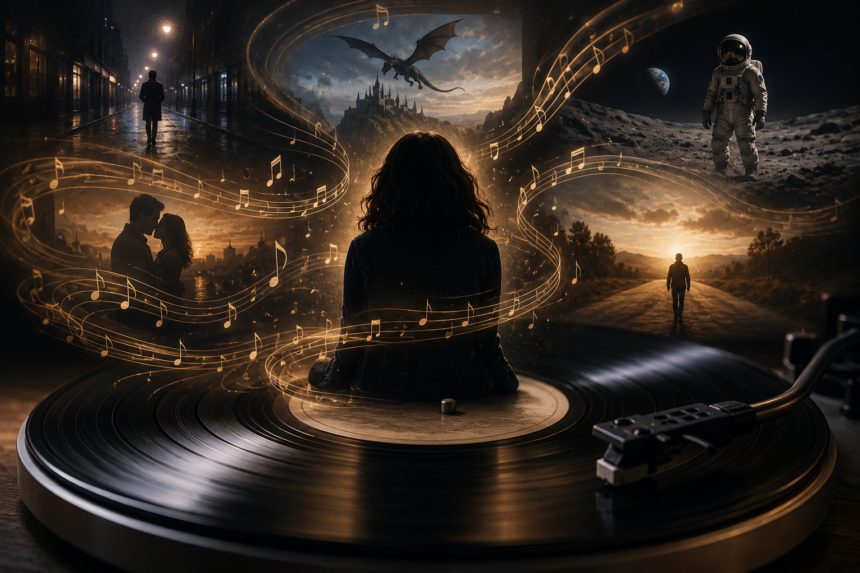

Hum a few bars of a beloved game’s theme to someone who has played it, and watch their face change. Certain melodies do something that screenshots and plot summaries cannot: they reopen the entire emotional world of a game in an instant. A soundtrack is often the part of a game that lodges deepest and lasts longest, still capable of raising goosebumps years after the console has been unplugged. This is not an accident of nostalgia. Game music does emotional work that is unique in all of media, and at its best it stops being an accompaniment and becomes part of the story itself.
This essay explores video game music emotion: how scores shape what we feel, why interactive music can do things film music cannot, and how a melody can become inseparable from the world it was written for.
Key Takeaways
- Video game music emotion comes from music’s direct line to feeling combined with games’ interactivity.
- Adaptive and dynamic scores respond to player action, something film and other media cannot do.
- Leitmotifs, recurring musical themes tied to characters or ideas, build meaning across dozens of hours.
- Silence and restraint are compositional choices too, and some of the most affecting moments in games use no music at all.
- Because players spend so long inside a game, its music binds tightly to memory and personal experience.
- The strongest game scores do not decorate the experience; they become an inseparable part of its story and identity.
Music’s Shortcut to Feeling
Music has always had a strange power to bypass the thinking mind and speak straight to emotion. A minor chord can produce sadness before you have consciously registered anything at all. Tempo, key, instrumentation, and volume act on us almost physically, quickening the pulse or slowing the breath. This is why film has always relied on scores, and why a scene played with the sound off feels flat and distant. Music tells you how to feel, often before you know what you are feeling.
Games inherit all of this, but they add something no other medium has: you are not watching, you are doing. The music is not scoring a fixed sequence someone else authored; it is scoring your actions, your choices, your presence in the world. That difference sounds small, but it changes everything about how game music works and why it can hit so hard.
The Thing Only Games Can Do: Adaptive Music
In a film, the composer knows exactly what is on screen at every second and can time every swell to the frame. In a game, the composer does not know what you will do. You might explore a room for thirty seconds or thirty minutes. You might sneak past the enemies or charge in. The music has to respond to a situation the composer cannot fully predict, and this constraint gave birth to one of the medium’s great innovations: adaptive, dynamic music.
Music that reacts to you
Adaptive scores shift in real time based on what is happening. Wander a peaceful field and the music is calm; the moment an enemy spots you, the same track can layer in percussion and urgency, then fade back to calm when the danger passes. Some games build their music in stems that mix and blend depending on your health, your location, or the intensity of combat, so no two players hear exactly the same performance. The score becomes a living thing that breathes with your play.
This produces emotional effects impossible in linear media. When the music surges precisely because of something you did, the feeling is not handed to you; it is generated by you. The triumph of a boss theme swelling as you land the final blow feels earned in a way a movie’s climax, however stirring, cannot quite match, because you are the one who made it happen.
That same principle, that a system responding to your own behavior produces a feeling no scripted sequence can replicate, is really a musical version of what makes absorption in games so powerful in the first place. The site’s essay on flow state gaming gets at the same mechanism from a different angle: when a system reacts instantly and precisely to your own input, whether that system is a difficulty curve or an adaptive score, the resulting state feels less like something you’re experiencing and more like something you’re generating.
Leitmotif: Meaning Built Over Time
One of the most powerful tools in game music is the leitmotif, a recurring melodic theme attached to a character, place, or idea. The technique is borrowed from opera and film, but games have a special advantage in using it: time. You might spend sixty, eighty, a hundred hours with a game, far longer than any film, and across those hours a leitmotif can accumulate enormous emotional weight.
A character’s theme, heard first as a simple, hopeful melody, can return late in the story in a minor key, slowed and mournful, and the contrast can be devastating precisely because you have lived with the original for so long. The music remembers who the character used to be, and so do you. By the time these themes reappear transformed, they carry the full weight of everything you have experienced. The melody becomes a kind of narrator, telling you about the passage of time and the cost of the journey without a single word.
It’s worth noting that this is a musical echo of something deeper that long-form games do to us generally: the site’s essay on identity in games explores how, across enough hours, the line between a character and the player controlling them starts to blur. A leitmotif works the same way. By the time a theme returns transformed, it isn’t only telling you the character has changed. It’s quietly registering that you have too, since you were the one carrying that theme with you the whole way.
The Power of Silence
It’s tempting to treat game music entirely as a question of what plays, but some of the most emotionally precise moments in games come from composers and directors choosing not to score a scene at all. Silence, or the sudden absence of a theme that has been present for hours, is itself a compositional decision, and it can land harder than any swelling orchestra.
A game that has trained you, over dozens of hours, to expect music during exploration or combat creates an expectation. Pull that expectation away at exactly the right moment, a quiet room after a loss, footsteps on snow with nothing underscoring them, and the silence becomes loud. It forces you to sit with a feeling directly, without music mediating or softening it. This is a trick film can use too, but games amplify it, because the player has spent so much personal time inside the sound of the world that its sudden withdrawal feels like something has actually been taken away.
Why Game Music Binds So Tightly to Memory
There is a reason game soundtracks trigger such intense nostalgia. You do not just hear a game’s music; you live inside it, often for a very long time, during a memorable period of your life. The town theme that played for the hundred hours you spent in a role-playing game becomes fused with that whole era, with who you were and where you were when you played it. The music becomes a container for the memory.
Interactivity deepens this bond. Because your own actions were synchronized to the music, hearing it again does not just recall the game; it recalls the feeling of agency, of being the one at the controls. This is why a game’s main theme can move a grown adult to tears decades later. It is not only a good piece of music. It is a key to a specific, embodied chapter of their own life.
This is closely related to a question the site has explored from another direction: its essay on what games teach us about time looks at how games let us feel like we’re racing against, or bending, time itself while we’re inside them. A soundtrack is what that bent, subjective sense of time sounds like in retrospect. Years later, the melody is the fastest route back to a version of time that no longer exists anywhere except in that music.
When the Score Becomes the Story
The highest achievement of game music is when it stops being separable from the game at all. In the greatest examples, you cannot imagine the world without its sound. The music is not describing the emotion of a scene from the outside; it is the emotion, woven so tightly into the design that the two cannot be pulled apart. A moment of loss is not accompanied by sad music; it is made of it. A triumphant climb is not scored by heroic music; the music is the heroism.
When a soundtrack reaches this level, it becomes part of the storytelling on equal footing with the writing, the art, and the mechanics. It carries themes the dialogue never states, marks emotional turns the visuals only hint at, and gives the whole experience its lasting identity. Ask people what they remember most about their favorite games, and astonishingly often the answer is the music, because the music was where the feeling lived.
Conclusion
Game music is not background. It is one of the medium’s most powerful emotional instruments, combining music’s ancient shortcut to feeling with interactivity’s unique capacity to make that feeling yours. Through adaptive scores that respond to your actions, leitmotifs that gather meaning across dozens of hours, and even the deliberate use of silence, a soundtrack can do far more than set a mood. It can become the memory, the narrator, and finally the story itself. The next time a game’s theme gives you chills, know that you are feeling one of the truest examples of video game music emotion, doing exactly what only games can.
Frequently Asked Questions
Why is video game music so emotional?
Video game music emotion comes from combining music’s direct line to feeling with the interactivity unique to games. Because the score often responds to your own actions and you spend many hours inside a game, the music becomes tied to your sense of agency and to personal memory, giving it unusual emotional power.
What is adaptive music in video games?
Adaptive or dynamic music changes in real time based on what is happening in the game. A calm exploration theme might layer in tension the moment an enemy appears, then relax when danger passes. This lets the score respond to unpredictable player actions, something linear media like film cannot do.
What is a leitmotif in game music?
A leitmotif is a recurring musical theme tied to a character, place, or idea. Games use leitmotifs especially effectively because players spend so many hours with them, allowing a familiar melody to return transformed later in the story and carry enormous accumulated emotional weight.
Why do old game soundtracks trigger such strong nostalgia?
Game soundtracks bind tightly to memory because players live inside them for long stretches during meaningful periods of life. The music fuses with the era and the sense of being at the controls, so hearing it again reopens both the game and a specific, embodied chapter of the player’s own past.
How is game music different from film music?
The key difference is interactivity. Film composers score a fixed sequence and can time every note to the frame, while game composers must write music that responds to unpredictable player behavior. This gives rise to adaptive scores and creates emotional effects, like a boss theme swelling as you strike the final blow, that feel generated by the player rather than handed to them.
Can a soundtrack really be part of a game’s story?
Yes. In the strongest examples, the music is not a separate accompaniment but an inseparable part of the storytelling, carrying themes the dialogue never states and defining the emotional identity of key moments. When a score reaches this level, the game becomes impossible to imagine without its sound.
This essay reflects general observations about music, psychology, and game design and is not a claim about any specific title, composer, or study.